
Security Architecture & Technology Management
- Intelligence-driven detection aligned with enterprise risk priorities
- Continuous analysis of global and regional threat activity
- Designed for regulated, large-scale enterprise environments
- Built to integrate seamlessly with existing SOC platforms and processes
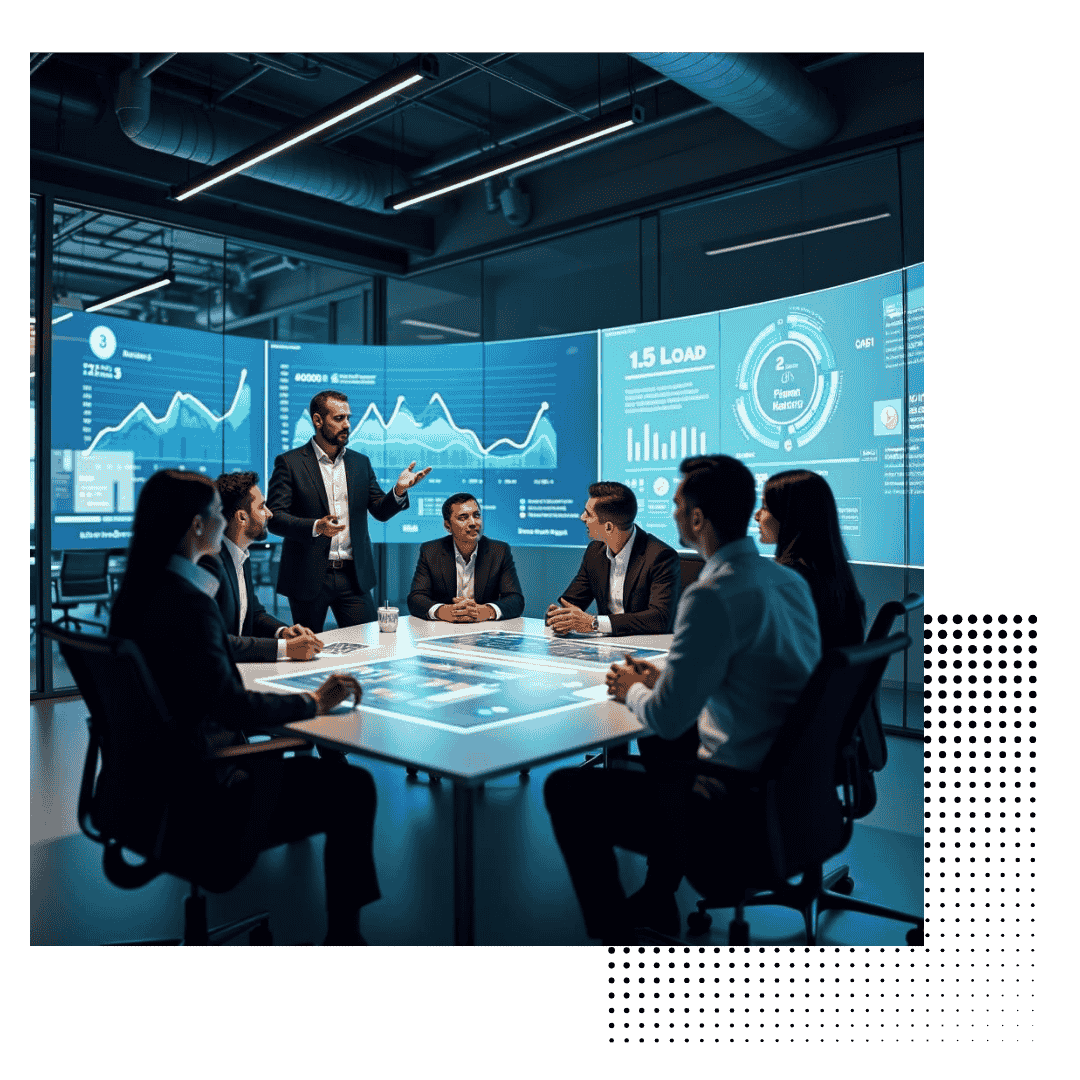
Choose the Best Cyber Security Company in Middle East
Choosing the best cybersecurity company in the Middle East means partnering with a provider that delivers continuous risk visibility, regional threat expertise, and enterprise-grade SOC capabilities.
Regional Threat Expertise
Enterprise-Grade SOC Capabilities
Our Core Services - What We Do
Enterprise Security Architecture Design & Assessment
We design and assess end-to-end enterprise security architectures covering infrastructure, applications, data, identity, network, and operations. Architectures are documented, enforceable, and mapped to real business and threat scenarios, not generic frameworks.
Cloud & Hybrid Security Architecture Management
We design and govern security architectures across public cloud, private cloud, and on-prem environments. This includes workload protection, cloud identity, network controls, logging, encryption, and shared responsibility enforcement.
Security Technology Stack Optimization & Rationalization
We analyse your existing security tools to identify redundancy, overlap, underutilization, and misconfiguration. Our team rationalizes the stack to ensure every technology has a defined role within the architecture.This reduces operational noise, lowers licensing waste,
SOC-Aligned Architecture & Technology Integration
Security architectures are designed to work with real SOC operations, not theoretical models. We align architectures with SIEM, SOAR, EDR, NDR, IAM, and threat intelligence platforms to ensure effective detection, response, and escalation.
Security Governance, Standards & Operating Model Design
We define security governance structures, architectural standards, and operating models that ensure long-term sustainability. This includes decision authority models, technology lifecycle management, and architecture review processes.
Zero Trust & Identity-Centric Architecture Implementation
We architect Zero Trust models centered on identity, device posture, network segmentation, and continuous verification. Designs are practical, phased, and compatible with existing enterprise environments, avoiding disruptive “rip and replace” approaches.
Explanation of Managed Security Device & Endpoint Services
Endpoint environments are primary targets for modern cyber attacks. SocEXpert’s endpoint-focused threat intelligence capabilities provide continuous visibility, contextual analysis, and proactive detection across enterprise devices.
Enterprise Endpoint Architecture Design
We design standardized endpoint security architectures across laptops, servers, VDI, and specialized systems. Architectures define control ownership, data flow, trust boundaries, and integration points.T
Advanced Endpoint Detection & Response (EDR) Alignment
We align endpoint technologies with real SOC detection and response workflows. Capabilities are mapped to threat scenarios, not just feature checklists. This enables faster containment, reduced false positives, and actionable security signals.
Endpoint Hardening & Configuration Governance
We define secure baseline configurations for operating systems and endpoint platforms. Hardening policies are aligned with regulatory, audit, and operational requirements. This reduces the attack surface while maintaining business productivity and stability.
Endpoint Visibility & Telemetry Management
We ensure endpoints generate the right level of telemetry for monitoring and investigations. Data sources are normalized and integrated into centralized security platforms. This provides continuous visibility without overwhelming SOC teams or system
Get Your Free Security Consultation
Best Security Solutions for Modern Network & SOC Challenges
SOCExperts helps organizations detect, assess, and respond to cyber threats with continuous monitoring, expert-led SOC operations, and proactive risk management.
Security Operations vs Security Monitoring
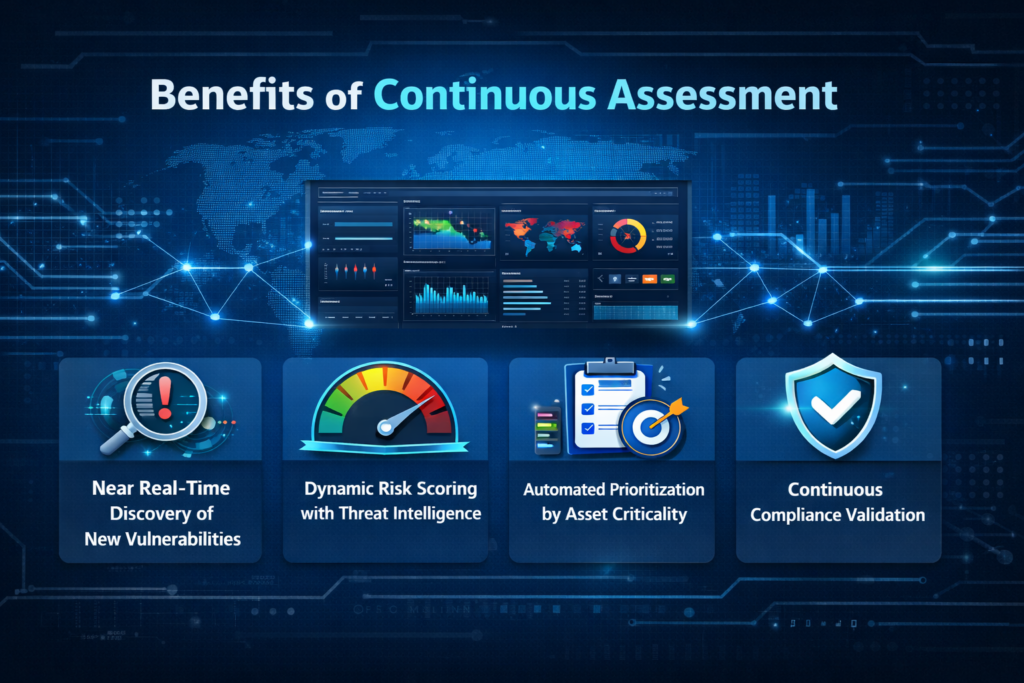
What is Security Monitoring?
Security Monitoring focuses on continuous visibility and detection of security events across enterprise environments.
It ensures that logs, alerts, and signals from endpoints, networks, cloud platforms, and applications are continuously collected and analyzed.
- Real-time log collection and event correlation
- Threat detection and alert generation
- Visibility across hybrid and multi-cloud environments
From Cyber Risk Chaos to Security Clarity
Traditional security approaches often slow organisations down and leave critical risks unaddressed. SOCEXpert transforms fragmented, reactive security efforts into a clear, continuous, and intelligence-driven vulnerability management approach, turning cyber risk into controlled, measurable outcomes.
The Problem
These represent what enterprises struggle with today
Tool Sprawl & Technology Overlap
Enterprises accumulate multiple security tools without a clear architectural role. Overlapping capabilities increase cost and operational complexity. Critical controls remain underutilized or misconfigured.
Fragmented Security Architecture
Security controls are implemented independently across infrastructure, cloud, applications, and endpoints. Lack of architectural alignment creates control gaps and overlaps. Security posture becomes inconsistent & difficult to manage.
Architecture Driven by Vendors, Not Risk
Security decisions are often influenced by product features instead of enterprise risk. Architectural choices fail to align with business priorities and the threat landscape. This results in ineffective security investments.
Limited SOC & Operational Integration
Security architectures are designed without considering SOC workflows. Monitoring and response tools lack proper integration. This reduces detection effectiveness and slows incident response.
Poor Scalability & Future Readiness
Legacy architectures struggle to support cloud adoption and digital transformation. Security controls fail to scale with business growth. New technologies introduce risk instead of resilience.
The Solution
Modern, continuous vulnerability management by SOCEXpert
Optimised & Rationalized Technology Stack
Each security technology is mapped to a defined architectural function. Redundant tools are eliminated, and capabilities are optimized. This reduces cost while improving operational effectiveness.
Unified Enterprise Security Architecture
A centralized, architecture-driven approach across all security domains. Controls are designed to work together with clear ownership and purpose. This ensures consistency, visibility, and an enforceable security posture.
Risk-Led & Intelligence-Informed Design
Architectural decisions are driven by business risk and threat intelligence. Controls are prioritized based on real-world attack scenarios. This ensures security investments deliver measurable risk reduction.
SOC-Aligned Architecture & Integration
Architectures are designed to support real SOC operations. Security tools integrate seamlessly with monitoring and response platforms. This enables faster detection, investigation, and containment.
Scalable & Future-Ready Security Design
Cloud-ready and modular architectures support business growth. Security adapts to new technologies without disruption. This ensures long-term resilience and operational sustainability.
Tools, Technologies, and Methodologies
SocEXpert’s Threat Intelligence & Analysis services integrate seamlessly into existing enterprise security ecosystems, ensuring maximum value without operational disruption.
Security Architecture Frameworks
Industry-aligned frameworks guide the design of enterprise security architectures.
They define trust boundaries, control placement, and integration models.
This ensures consistency, scalability, and risk-aligned security design.
Network & Cloud Security Architecture
Network and cloud security technologies protect data flows and workloads.
They enforce segmentation, encryption, and secure connectivity.
This enables secure operations across hybrid and multi-cloud environments.
Identity & Access Management (IAM)
IAM platforms enforce identity-centric security across users, devices, and applications.
They support authentication, authorisation, and privileged access controls.
This reduces unauthorised access and strengthens Zero Trust implementation.
Compliance and Regulatory Relevance
SOCExpert aligns Security Architecture & Technology Management with global and regional compliance requirement
TOGAF Security Architecture Framework
CIS Critical Security Controls (CIS Controls)
Benefits - Business Impact
Reduced Security Risk & Faster Incident Response
A well-architected monitoring and operations model significantly reduces organizational risk exposure. By correlating events across endpoints, networks, and cloud environments, threats are detected earlier and contained faster. This minimizes attacker dwell time, reduces business disruption, and strengthens the organization’s overall cyber resilience.
Improved Compliance Confidence & Audit Outcomes
Security operations aligned with regulatory expectations simplify compliance management. Continuous monitoring, documented controls, and traceable incident handling improve audit readiness. Organizations gain greater confidence during regulatory reviews, reduce last-minute remediation efforts, and demonstrate proactive governance to regulators and stakeholders.
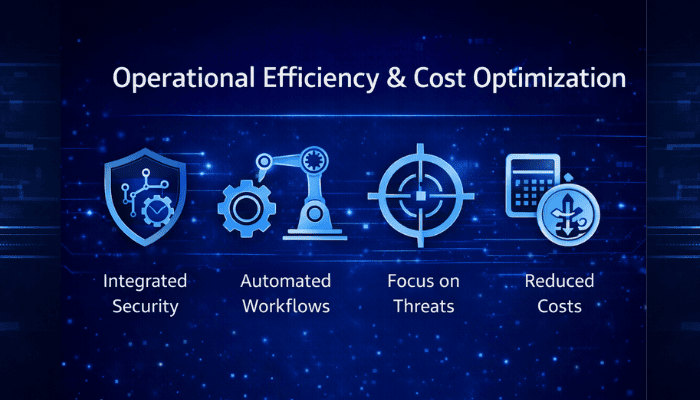
Operational Efficiency & Cost Optimization
Integrated security technologies and automated workflows reduce manual effort and operational overhead. SOC teams focus on high-impact threats instead of alert noise. Optimised tool usage and reduced duplication lower licensing and operational costs while improving overall security effectiveness and return on investment.
why choose us
SocExperts delivers enterprise-grade Security Architecture & Technology Management built for real-world operations. Our approach connects architecture, technology, and SOC execution to help organizations reduce risk, optimize security investments, and maintain compliance while supporting business growth.
- SOC-Aligned Architecture, Not Theoretical Designs
- Technology Optimization with Measurable Value
- Scalable, Compliance-Ready Security Foundations

FAQs
1. What is Security Architecture & Technology Management?
Security Architecture & Technology Management focuses on designing, governing, and optimizing enterprise security structures and tools. It ensures all security controls work together, align with business objectives, reduce risk, and support monitoring, compliance, and long-term scalability across environments.
2. Why is security architecture important for enterprises?
Security architecture provides a structured foundation for protecting enterprise systems and data. Without it, security tools operate in silos, increasing risk and cost. A strong architecture ensures consistent controls, clear ownership, better visibility, and effective incident response capabilities
3. How does this service differ from traditional security consulting?
Traditional consulting often delivers static reports. Security Architecture & Technology Management is an ongoing service that governs design, tool usage, integration, and lifecycle management. It focuses on operational readiness, SOC alignment, and continuous improvement rather than one-time assessments.
4.What problems does Security Architecture & Technology Management solve?
This service addresses fragmented architectures, overlapping tools, misaligned controls, poor scalability, and weak SOC integration. It helps enterprises eliminate blind spots, reduce complexity, improve detection and response, and ensure security investments deliver measurable business value.
5.How does this service support SOC and security operations?
Architectures are designed with SOC workflows in mind. Tools are integrated to support monitoring, correlation, and response. This improves alert quality, reduces investigation time, and ensures that security operations teams can act effectively during real-world incidents.
6.Is this service suitable for cloud and hybrid environments?
Yes. Security Architecture & Technology Management covers on-premises, cloud, and hybrid environments. Architectures are designed to support cloud-native controls, shared responsibility models, and secure integration between environments while maintaining centralized visibility and governance.
7. How does this service help with compliance and audits?
Security architectures are mapped to regulatory and audit requirements. Controls, processes, and technologies are documented and traceable. This improves audit readiness, simplifies evidence collection, and ensures compliance gaps are identified and addressed proactively
8.. Does this service require replacing existing security tools?
Not necessarily. The focus is on optimization, not replacement. Existing tools are assessed for relevance, configuration, and integration. Redundant or ineffective tools may be reduced, while valuable technologies are aligned within a clear architectural framework.
9. Who should use Security Architecture & Technology Management services?
This service is ideal for mid to large enterprises, regulated organizations, and businesses undergoing digital transformation. It supports CISOs, IT leaders, and compliance teams seeking scalable, governed, and operationally effective security foundations.
10. What outcomes can enterprises expect from this service?
Enterprises gain a unified security architecture, optimized technology stack, improved SOC effectiveness, reduced risk exposure, better compliance confidence, and scalable security operations. The result is stronger resilience, clearer governance, and improved return on security investments.