
Incident Response & Digital Forensics
- Rapid containment of active cyber incidents with minimal business disruption
- Forensically sound investigations aligned with regulatory and legal expectations
- SOC-led response operations with executive-level visibility
- Evidence-driven decision making for compliance, audit, and insurance readiness
- End-to-end support from detection through recovery and assurance

Choose the Best Cyber Security Company in Middle East
Choosing the best cybersecurity company in the Middle East means partnering with a provider that delivers continuous risk visibility, regional threat expertise, and enterprise-grade SOC capabilities.
Regional Threat Expertise
Enterprise-Grade SOC Capabilities
Our Core Services - What We Do
Enterprise Incident Response Management
SocEXpert delivers coordinated incident response services designed to contain threats quickly and decisively. We manage the full incident lifecycle, ensuring technical actions are aligned with business priorities, executive communication, and regulatory obligations while reducing operational downtime.
Digital Forensic Investigation & Analysis
We perform in-depth forensic investigations across endpoints, servers, networks, and cloud environments. Our investigations focus on evidence integrity, accurate root cause identification, and defensible reporting suitable for audits, legal review, and regulatory submission ac
Ransomware & Advanced Malware Response
Our team specializes in responding to ransomware and advanced persistent threats. We identify initial access vectors, analyze malware behavior, remove persistence mechanisms, and support secure system restoration without compromising evidence or business continuity.
Data Breach & Insider Threat Investigations
SocEXpert investigates unauthorized data access, data exfiltration, and insider-related incidents. We provide clear attribution analysis and impact assessment to support executive decisions, HR processes, and regulatory disclosure requirements.
Cloud & Hybrid Environment Incident Response
We respond to security incidents across cloud, hybrid, and SaaS environments. Our approach respects shared responsibility models while ensuring visibility into access abuse, misconfigurations, identity compromise, and API-level threats.
Post-Incident Remediation & Assurance
Beyond containment, we help organizations strengthen their security posture. This includes remediation guidance, validation of controls, and assurance activities that reduce the likelihood of recurrence and improve overall incident readiness
Explanation of Managed Security Device & Endpoint Services
Managed Security Device & Endpoint Services are comprehensive solutions that involve continuous monitoring and management of an organization’s devices and endpoints. These services ensure that all connected devices, including servers, workstations, mobile devices, and IoT endpoints, are securely managed and protected against vulnerabilities.
Endpoint Compromise Detection & Scoping
We accurately identify compromised endpoints using advanced telemetry and forensic artifacts. This allows precise scoping of affected assets, preventing unnecessary shutdowns while ensuring no hidden persistence remains.
Advanced Malware & Memory Forensics
Our analysts perform memory analysis and artifact correlation to uncover fileless malware, credential theft, and stealth attack techniques that evade traditional detection mechanisms.
Attack Chain & Timeline Reconstruction
We reconstruct the full attack timeline, from initial access through lateral movement and impact. This clarity enables confident executive reporting, regulatory disclosure, and informed remediation planning
Controlled Endpoint Isolation & Containment
SocEXpert executes targeted containment actions to stop threat propagation without disrupting critical business operations. All actions are justified, logged, and aligned with incident governance requirements.
Get Your Free Security Consultation
Best Security Solutions for Modern Network & SOC Challenges
SOCExperts helps organizations detect, assess, and respond to cyber threats with continuous monitoring, expert-led SOC operations, and proactive risk management.
Continuous Security Monitoring vs Traditional Monitoring
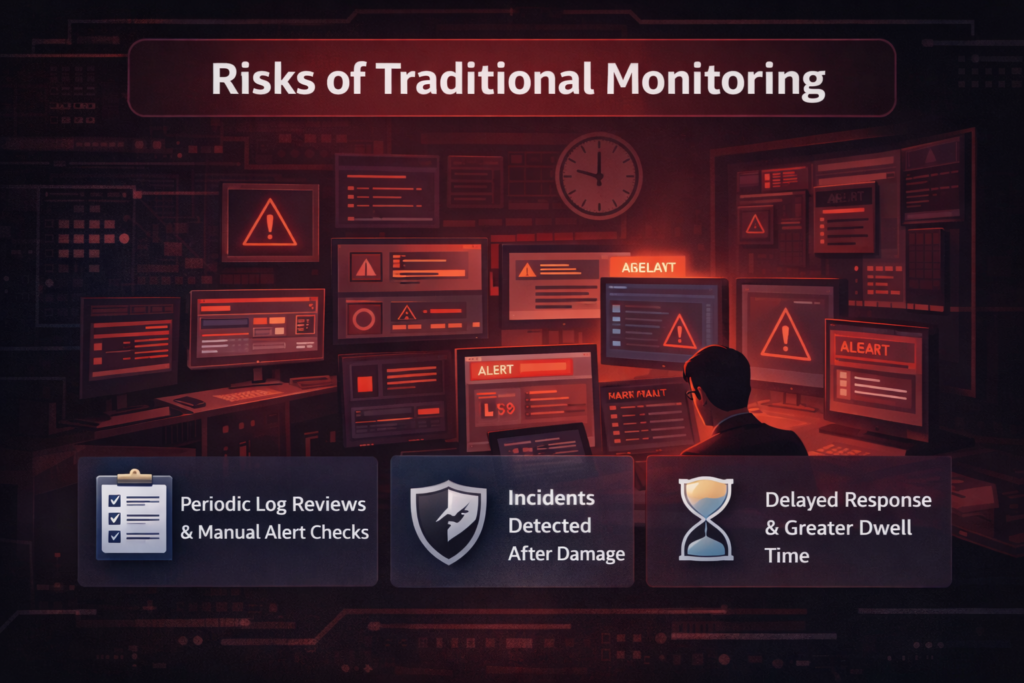
Continuous Security Monitoring
Provides 24/7 real-time visibility across networks, endpoints, cloud, and applications.
Security events are continuously analyzed and correlated by SOC-driven processes.
Threats are detected early, prioritized intelligently, and responded to immediately.
Ensures proactive security operations with reduced risk and faster containment
- Early detection and correlation of security threats as they occur
- Faster incident response through SOC-driven monitoring and analysis
- 24/7 real-time visibility across networks, endpoints, cloud, and applications
From Security Blind Spots to Operational Security Clarity
Traditional security operations often rely on fragmented monitoring, delayed alerting, and manual processes—leaving organizations exposed to threats for extended periods.
Core Security Monitoring & Operations transforms reactive security into a centralized, continuous, and intelligence-driven operational model with measurable outcomes.
The Problem
These represent what enterprises struggle with today
Delayed Incident Identification
Many organizations detect incidents only after systems are compromised or business operations are disrupted. Lack of real-time visibility allows attackers to persist, escalate privileges, and exfiltrate data unnoticed.
Unstructured Incident Response Process
Incident response is often ad hoc and reactive, with no predefined procedures or ownership. This leads to confusion, slower containment, and inconsistent handling across teams and environments.
Limited Forensic Readiness
Enterprises lack proper forensic logging, evidence preservation, and investigation workflows. Critical evidence is overwritten or lost, making root cause analysis and legal validation difficult.
Extended Attacker Dwell Time
Without rapid response and investigation, attackers remain active within the environment for extended periods. This increases the scope of compromise, financial impact, and regulatory exposure.
Inadequate Incident Containment
Manual containment actions delay isolation of affected systems. This allows threats to spread laterally across networks, endpoints, and cloud environments.
The Solution
Modern, continuous vulnerability management by SOCEXpert
Rapid Incident Detection & Activation
Incidents are identified early through continuous monitoring and intelligence-driven alerts. Immediate activation of response workflows ensures swift action before business impact escalates.
Structured Incident Response Framework
A clearly defined, SOC-led incident response process ensures consistent handling across all incidents. Roles, responsibilities, and escalation paths are established to eliminate confusion and delays.
Forensic-Ready Investigation Approach
Digital forensic techniques are applied from the start, ensuring proper evidence collection, preservation, and chain of custody. This enables accurate root cause analysis and defensible investigations.
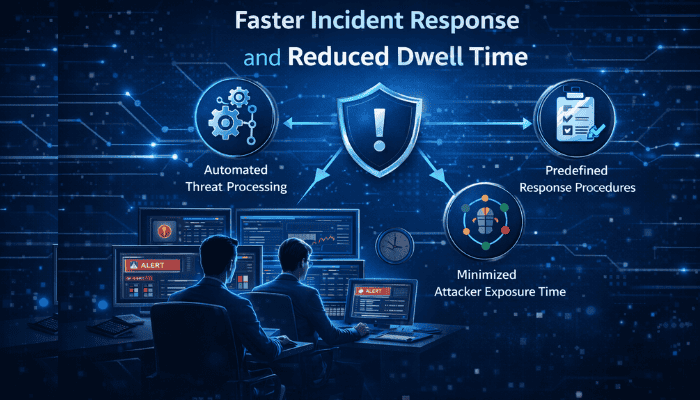
Reduced Attacker Dwell Time
Rapid triage, investigation, and containment significantly reduce the time attackers remain in the environment. This limits data exposure, operational disruption, and reputational damage.
Swift Containment & Remediation
Affected systems are isolated quickly using proven containment strategies. Coordinated remediation prevents reinfection and restores normal operations with minimal downtime.
Tools, Technologies, and Methodologies
Our Incident Response & Digital Forensics service is powered by an enterprise-grade technology stack and SOC-driven methodologies designed to deliver continuous visibility, rapid detection, and effective response across complex environments.
Advanced Detection & Forensic Technologies
We utilize enterprise-grade detection, response, and forensic technologies to ensure deep visibility without compromising operational stability. Our tooling supports rapid investigation, evidence preservation, and scalable response across complex enterprise environments.
Intelligence-Driven Investigation Methodology
Threat intelligence is embedded throughout our response process. This allows us to understand attacker behavior, prioritize response actions, and align remediation with real-world threat activity relevant to the Middle East region.
Structured Incident Response Frameworks
Our methodology follows proven incident response frameworks adapted for regional regulatory and governance requirements. Each phase is clearly defined, measurable, and designed to support executive oversight and compliance validation
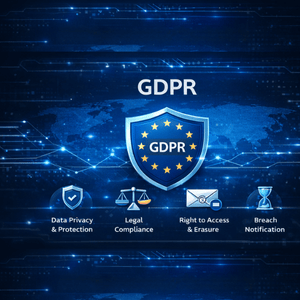
Compliance and Regulatory Relevance
SOCExpert aligns Security Architecture & Technology Management with global and regional compliance requirement
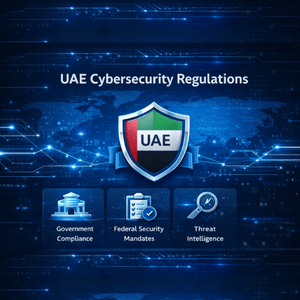
Regulatory-Aligned Investigation Processes
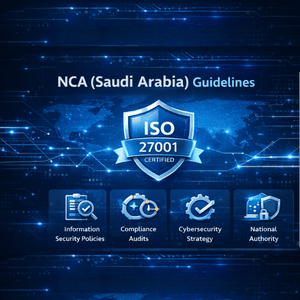
Audit-Ready Documentation & Reporting
Benefits - Business Impact
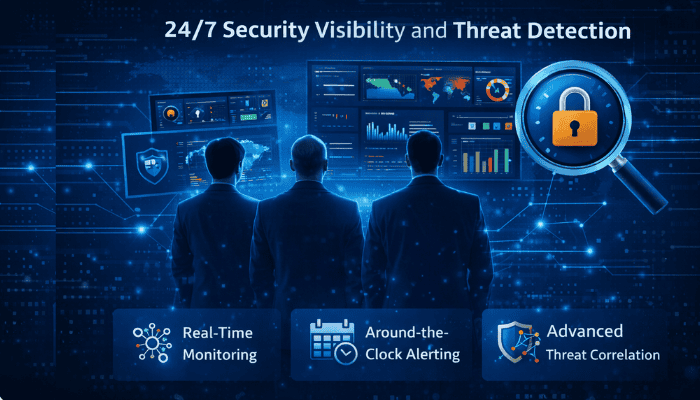
Reduced Incident Impact and Downtime
By detecting and containing incidents early, SocEXpert significantly reduces operational disruption and financial loss. Intelligence-led response actions prevent lateral movement and escalation, enabling faster recovery while protecting critical business services and customer trust.
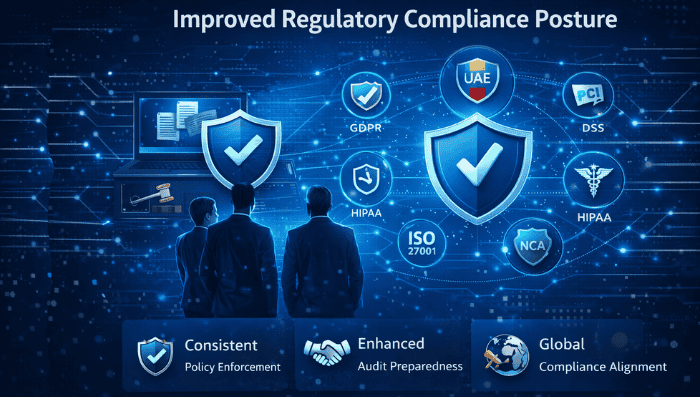
Stronger Compliance and Governance Posture
Our audit-ready investigations and documented response actions support regulatory compliance and governance requirements. Organizations gain confidence that incidents are handled in line with regional regulations, reducing regulatory risk and improving stakeholder assurance
Improved Security Maturity and Resilience
Each incident response engagement strengthens the organization’s overall security posture. Actionable remediation insights, validated controls, and improved incident readiness reduce the likelihood of recurrence and enhance long-term cyber resilience.
why choose us
Strengthen Enterprise Security with SOCExpert’s Incident Response & Digital Forensics
SocEXpert delivers incident response and digital forensics as a strategic enterprise service, not an emergency-only function. We operate as an extension of your security leadership, combining SOC expertise, forensic precision, and regulatory awareness to protect operations, reputation, and stakeholder confidence.
- SOC-Led Expertise, Not Tool Dependency
- Built for Regulated and High-Risk Enterprises
- Regional Understanding with Global Standards

Add Your Heading Text Here
1. What is Incident Response & Digital Forensics in cybersecurity?
Incident Response & Digital Forensics involves detecting, containing, investigating, and recovering from cyber incidents. It combines technical response actions with forensic evidence analysis to understand attack impact, preserve proof, and support compliance, audits, and legal requirements.
2. When should an enterprise initiate incident response services?
Incident response should begin as soon as suspicious activity, security alerts, or abnormal system behavior is detected. Early activation reduces business impact, limits attacker movement, preserves evidence integrity, and ensures regulatory obligations are met without delay.
3. How does digital forensics support regulatory compliance?
Digital forensics ensures evidence is collected, preserved, and documented using defensible methods. This supports regulatory audits, incident reporting obligations, insurance claims, and legal proceedings by demonstrating due diligence and maintaining chain of custody.
4. What types of incidents require forensic investigation?
Forensic investigation is required for ransomware attacks, data breaches, insider threats, unauthorized access, malware infections, and cloud security incidents. Any event involving data exposure, operational disruption, or regulatory impact benefits from forensic validation.
5. How is SOC-driven incident response different from reactive response?
SOC-driven incident response enables continuous monitoring, early detection, and coordinated containment. Unlike reactive models that respond after damage occurs, SOC-led response correlates intelligence across systems to reduce response time and business disruption.
6. Can incident response services cover cloud and SaaS environments?
Yes. Modern incident response includes cloud, hybrid, and SaaS environments. Investigations address identity compromise, misconfigurations, API abuse, and unauthorized access while aligning with shared responsibility and enterprise governance models.
7. How long does a typical incident response investigation take?
The duration depends on incident complexity, environment size, and scope. Initial containment may occur within hours, while full forensic investigation, reporting, and remediation validation can take days or weeks for enterprise-scale incidents.
8. What documentation is provided after an incident response engagement?
Organizations receive detailed incident reports including attack timelines, affected assets, forensic findings, response actions, and remediation recommendations. Documentation is structured to support executive review, audits, regulators, and third-party assessments.
9. How does threat intelligence improve incident response outcomes?
Threat intelligence provides context on attacker behavior, tactics, and regional threat trends. This allows faster attribution, prioritization of response actions, and more effective containment based on real-world adversary techniques.
10. Is incident response only for large enterprises?
Incident response is critical for any organization handling sensitive data or operating regulated systems. Enterprises benefit most due to complex environments, compliance requirements, and higher business impact from cyber incidents.