
Threat Intelligence & Analysis for UAE & Middle East Enterprises
- Intelligence-driven detection aligned with enterprise risk priorities
- Continuous analysis of global and regional threat activity
- Designed for regulated, large-scale enterprise environments
- Built to integrate seamlessly with existing SOC platforms and processes

Choose the Best Cyber Security Company in Middle East
Choosing the best cybersecurity company in the Middle East means partnering with a provider that delivers continuous risk visibility, regional threat expertise, and enterprise-grade SOC capabilities.
Regional Threat Expertise
Enterprise-Grade SOC Capabilities
Our Core Services - What We Do
Strategic Threat Intelligence
Our Strategic Threat Intelligence service provides high-level insights into threat actors, attack trends, and regional risk factors affecting enterprises in the UAE and Middle East. This intelligence enables leadership teams to understand the evolving threat landscape
Tactical Threat Intelligence
Tactical Threat Intelligence focuses on converting threat data into actionable detection and prevention capabilities. We analyze attacker techniques, tools, and infrastructure to deliver indicators and patterns that enhance SOC monitoring and detection logic.
Operational Threat Analysis
Operational Threat Analysis is embedded directly into day-to-day SOC operations. We continuously analyze logs, telemetry, alerts, and threat feeds to identify suspicious activity, emerging attack patterns, and indicators of compromise.
Intelligence-Led Threat Hunting
Our threat hunting service is driven by real-world adversary intelligence rather than assumptions. Analysts proactively search for hidden threats using hypotheses based on known attacker behavior, regional campaigns, and advanced tactics.
Malware & Attack Campaign Intelligence
We conduct in-depth analysis of malware, phishing campaigns, and attacker infrastructure to understand intent, scope, and potential exposure. This intelligence helps organizations rapidly assess risk and apply targeted containment strategies.
Intelligence Reporting & Risk Communication
We provide structured, role-based intelligence reporting tailored for SOC teams, CISOs, and executive stakeholders. Reports focus on relevance, impact, and recommended actions rather than raw technical detail.
Explanation of Managed Security Device & Endpoint Services
Endpoint environments are primary targets for modern cyber attacks. SocEXpert’s endpoint-focused threat intelligence capabilities provide continuous visibility, contextual analysis, and proactive detection across enterprise devices.
Continuous Endpoint Threat Visibility
Endpoints are continuously monitored using intelligence-enriched detection models that identify suspicious activity beyond traditional signature-based controls. Behavioral signals are correlated with real-world threat intelligence to uncover advanced attacks early.
Advanced Behavioral Threat Analysis
Endpoint behavior is analyzed for indicators such as privilege escalation, abnormal process execution, and unauthorized persistence mechanisms. These behaviors are mapped to known adversary tactics and techniques.
Intelligence-Driven Containment & Response
Endpoint alerts are enriched with contextual intelligence, enabling faster containment decisions. Security teams can isolate affected systems, block malicious processes, and prevent further spread with confidence.
Proactive Endpoint Threat Hunting
Our analysts actively hunt for threats across endpoint telemetry using intelligence-based queries. This approach identifies dormant malware, credential abuse, and attacker footholds before they escalate.
Get Your Free Security Consultation
Best Security Solutions for Modern Network & SOC Challenges
SOCExperts helps organizations detect, assess, and respond to cyber threats with continuous monitoring, expert-led SOC operations, and proactive risk management.
Continuous Vulnerability Assessment vs Periodic Assessment
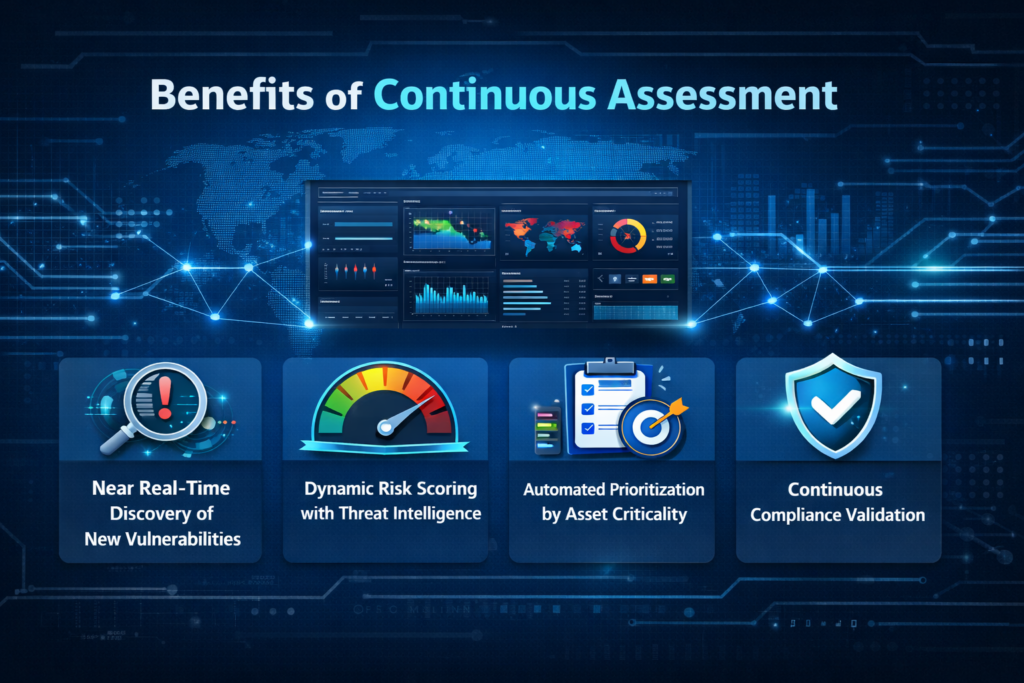
Limitations of Periodic Assessments
Traditional vulnerability assessments conducted quarterly or annually are no longer sufficient. In fast-moving enterprise environments, new vulnerabilities emerge daily, configurations change frequently, and threat actors exploit weaknesses within hours of disclosure.Periodic assessments often result in:
- Outdated risk views Backvisibility of unprioritized findings
- Limited visibility into real-world exploitability
- Compliance gaps between audit cycles
From Cyber Risk Chaos to Security Clarity
Traditional security approaches often slow organisations down and leave critical risks unaddressed. SOCEXpert transforms fragmented, reactive security efforts into a clear, continuous, and intelligence-driven vulnerability management approach, turning cyber risk into controlled, measurable outcomes.
The Problem
These represent what enterprises struggle with today
Lack of Threat Visibility
Organizations rely on isolated security data without a unified view of threats. Without intelligence correlation, emerging attacks and adversary activity remain hidden across complex enterprise environments.
Static & Outdated Threat Data
Traditional security models depend on static indicators and periodic updates. This limits the ability to detect new, evolving threats and leaves enterprises exposed to zero-day and targeted attacks.
No Adversary Context
Security teams see alerts but lack insight into attacker intent, techniques, and campaigns. Without adversary context, it becomes difficult to understand the true risk and prioritize response actions.
Delayed Intelligence-Driven Detection
Threats are often identified only after compromise indicators appear. The absence of continuous intelligence analysis increases attacker dwell time and potential business impact
Limited Regional Threat Awareness
Global threat data often fails to reflect region-specific attack patterns. Enterprises lack visibility into threat actors and campaigns actively targeting the UAE and Middle East
The Solution
Modern, continuous vulnerability management by SOCEXpert
Unified Threat Intelligence Visibility
Threat intelligence is centralized and correlated across logs, endpoints, network, and cloud environments. This provides a clear, continuous view of active threats and attacker behavior across the enterprise.
Continuous, Real-Time Intelligence Updates
Threat intelligence is continuously refreshed using global and regional sources. This ensures detection capabilities stay aligned with evolving attacker techniques and emerging threat campaigns.
Adversary-Focused Threat Context
Threat intelligence delivers deep insight into attacker tactics, techniques, and intent. Security teams gain clarity on who is attacking, how they operate, and what assets are at risk.
Proactive Intelligence-Led Detection
Intelligence analysis enables early detection of threats before exploitation occurs. Continuous monitoring reduces dwell time and allows security teams to respond before damage is done.
Actionable Intelligence for SOC Operations
Raw threat data is transformed into actionable insights, detection use cases, and response guidance. Intelligence is embedded directly into SOC workflows for faster, more confident decisions.
Tools, Technologies, and Methodologies
SocEXpert’s Threat Intelligence & Analysis services integrate seamlessly into existing enterprise security ecosystems, ensuring maximum value without operational disruption.
SIEM – Intelligence-Enriched Correlation
Threat intelligence is integrated into SIEM platforms to enhance event correlation and incident detection. Raw logs are transformed into prioritized security incidents aligned with known attacker behavior.
This reduces noise and improves SOC analysts’ ability to identify genuine threats quickly.
EDR / XDR – Extended Detection & Context
Endpoint and extended detection platforms are enhanced with threat intelligence to identify advanced attacks across endpoints, identities, cloud workloads, and networks.
This unified visibility enables faster investigation and improved understanding of attack progression across the environment.
SOAR – Automated Intelligence-Driven Response
Threat intelligence powers automated response workflows, enabling consistent containment, investigation, and remediation actions. Automation reduces response times while maintaining governance and control.
This ensures rapid, repeatable,
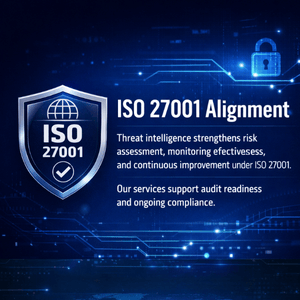
Compliance and Regulatory Relevance
SOCExpert aligns Security Architecture & Technology Management with global and regional compliance requirement
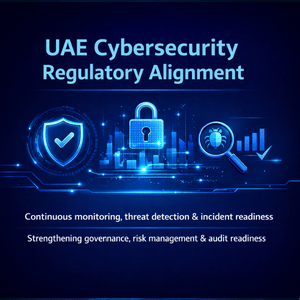
UAE Cybersecurity Regulatory Alignment

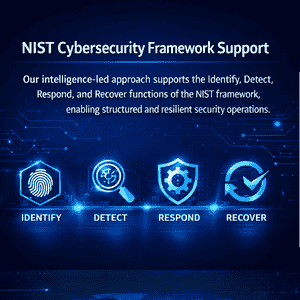
NIST Cybersecurity Framework Support
Benefits - Business Impact
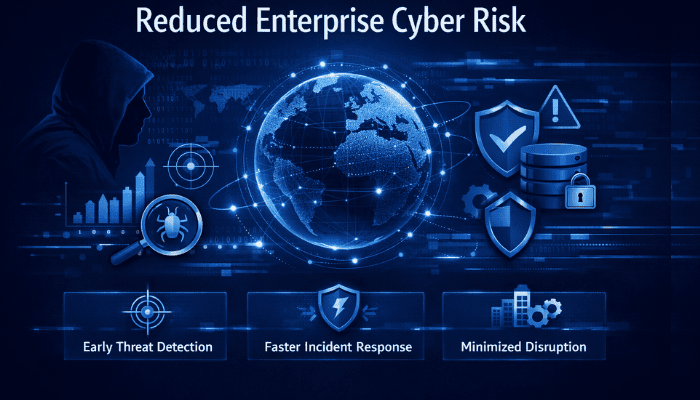
Reduced Enterprise Cyber Risk
Threat Intelligence & Analysis enables early identification of attacker intent, active campaigns, and emerging threats before exploitation occurs. By correlating intelligence with assets and business context, enterprises significantly reduce breach likelihood, limit attack dwell time, and minimize operational disruption while maintaining strong regulatory and risk management posture
Faster, More Accurate Incident Response
Intelligence-enriched detection provides security teams with clear context around threats, attacker techniques, and impact severity. This eliminates guesswork during investigations, accelerates triage, and enables confident containment decisions, allowing incidents to be resolved quickly before escalation, data loss, or business interruption occurs.
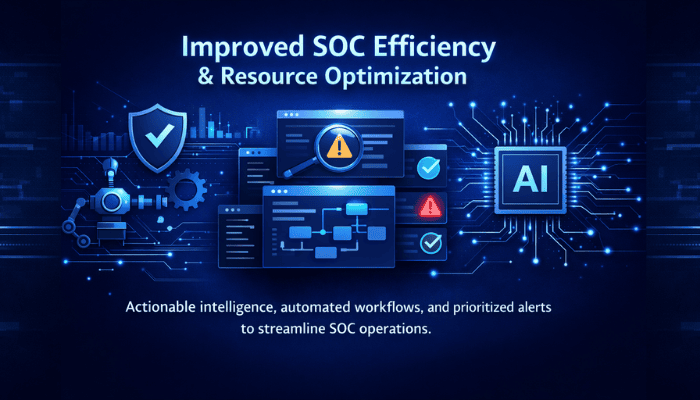
Improved SOC Efficiency & Resource Optimization
Actionable threat intelligence reduces alert noise, prioritizes high-risk incidents, and streamlines SOC workflows. Automation and intelligence-driven analysis optimize analyst effort, prevent burnout, and ensure security resources are focused on genuine threats, improving overall SOC performance without increasing operational costs.
why choose us
SocEXpert delivers intelligence-led security operations tailored to enterprise environments in the UAE and Middle East, combining technical depth with regulatory awareness
- Improved SOC Efficiency & Resource Optimization
- Regional Threat Expertise
- Compliance-Aligned Services

FAQs
What is Threat Intelligence & Analysis in cybersecurity?
Threat Intelligence & Analysis is the process of collecting, correlating, and analyzing threat data to understand attacker behavior, intent, and risk. It enables enterprises to proactively detect threats, prioritize incidents, and strengthen security operations beyond reactive alert-based monitoring.
2. How does Threat Intelligence & Analysis improve enterprise security?
Threat Intelligence & Analysis improves enterprise security by providing context around threats, identifying active attack campaigns, and enabling early detection. This reduces attacker dwell time, strengthens incident response, and supports informed risk-based security decisions across complex environments.
3. Why is Threat Intelligence important for SOC operations?
Threat Intelligence is critical for SOC operations because it transforms raw alerts into actionable insights. It reduces false positives, improves alert prioritization, and enables analysts to understand attacker tactics, resulting in faster investigations and more effective incident response.
4. How is Threat Intelligence & Analysis different from traditional security monitoring?
Traditional monitoring focuses on reacting to alerts, while Threat Intelligence & Analysis emphasizes understanding attacker behavior and intent. Intelligence-driven monitoring enables proactive detection, contextual correlation, and continuous risk awareness rather than delayed, reactive incident handling.
5. What types of Threat Intelligence are used in enterprise environments?
Enterprise Threat Intelligence typically includes strategic, tactical, and operational intelligence. These layers support executive risk decisions, improve detection logic, and enhance real-time SOC investigations by aligning intelligence with assets, users, and business impact.
6. How does Threat Intelligence reduce false positives?
Threat Intelligence reduces false positives by correlating alerts with real-world attacker behavior and known threat patterns. This context allows SOC teams to distinguish genuine threats from benign activity, improving detection accuracy and analyst efficiency.
7. Is Threat Intelligence & Analysis relevant for UAE and Middle East enterprises?
Yes. Threat Intelligence & Analysis is highly relevant for UAE and Middle East enterprises due to region-specific threat actors, geopolitical risks, and regulatory requirements. Regional intelligence improves visibility into targeted campaigns and strengthens compliance readiness
8. How does Threat Intelligence support compliance and regulatory requirements?
Threat Intelligence supports compliance by strengthening monitoring, detection, and incident response controls required by regulations. It improves audit readiness, risk assessment, and continuous security monitoring aligned with standards such as ISO 27001 and regional cybersecurity frameworks.
9. Can Threat Intelligence integrate with existing SOC tools?
Yes. Threat Intelligence integrates with SIEM, EDR/XDR, and SOAR platforms to enhance correlation, detection, and response workflows. This ensures intelligence becomes operational rather than remaining static or disconnected from daily SOC activities.
10. What business benefits does Threat Intelligence & Analysis provide?
Threat Intelligence & Analysis reduces cyber risk, accelerates incident response, and improves SOC efficiency. By enabling proactive threat detection and informed decision-making, enterprises protect critical assets, minimize disruption, and optimize security investments without increasing operational overhead.