
SOC AS A SERVICE: STRATEGIC ADVISORY GUIDE
Introduction: The Paradigm Shift in Security Operations
The traditional approach to Security Operations Centers (SOC) is undergoing a radical transformation. For most enterprises, the challenge is no longer just about acquiring the right tools, but about the unsustainable overhead of retaining specialized talent and maintaining 24/7 vigilance. This guide outlines the foundational definition and core components of a modern SOCaaS architecture. It helps leaders understand how the model shifts from traditional legacy MSSPs to a collaborative, cloud-native Detection Engineering capability.
What This Service Means in Modern SOC
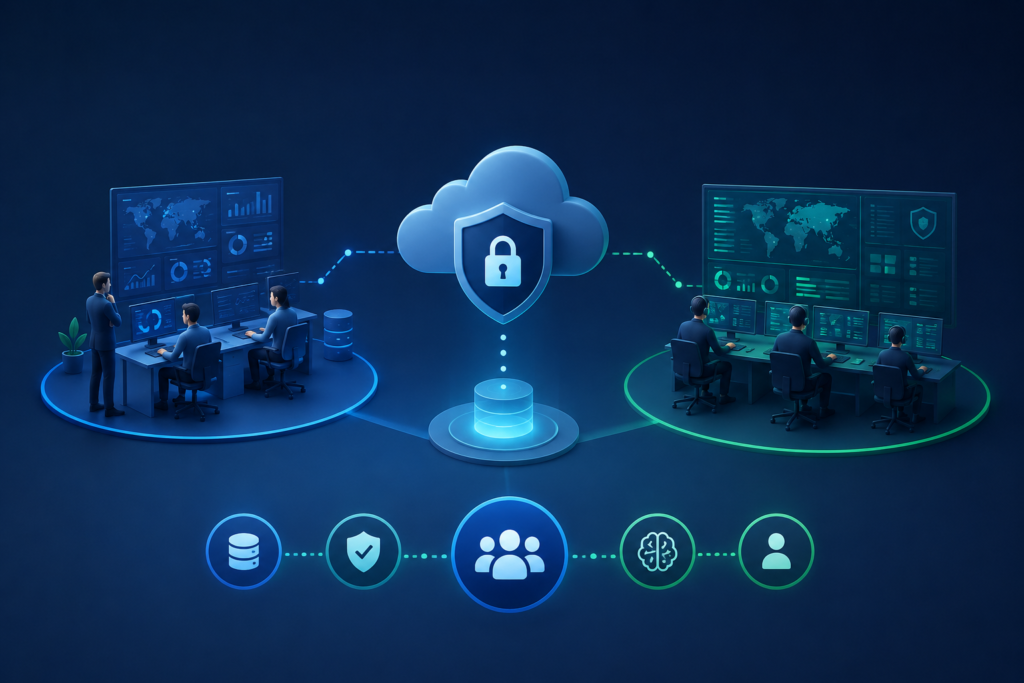
In the current threat landscape, SOCaaS represents a collaborative, cloud-native extension of an organization’s internal IT team. It involves a shared responsibility model where the provider delivers the platform, threat intelligence, and elite human expertise, while the client retains ownership of data and risk appetite. It is a shift from monitoring “everything” to detecting “what matters”.
Key Components / Capabilities
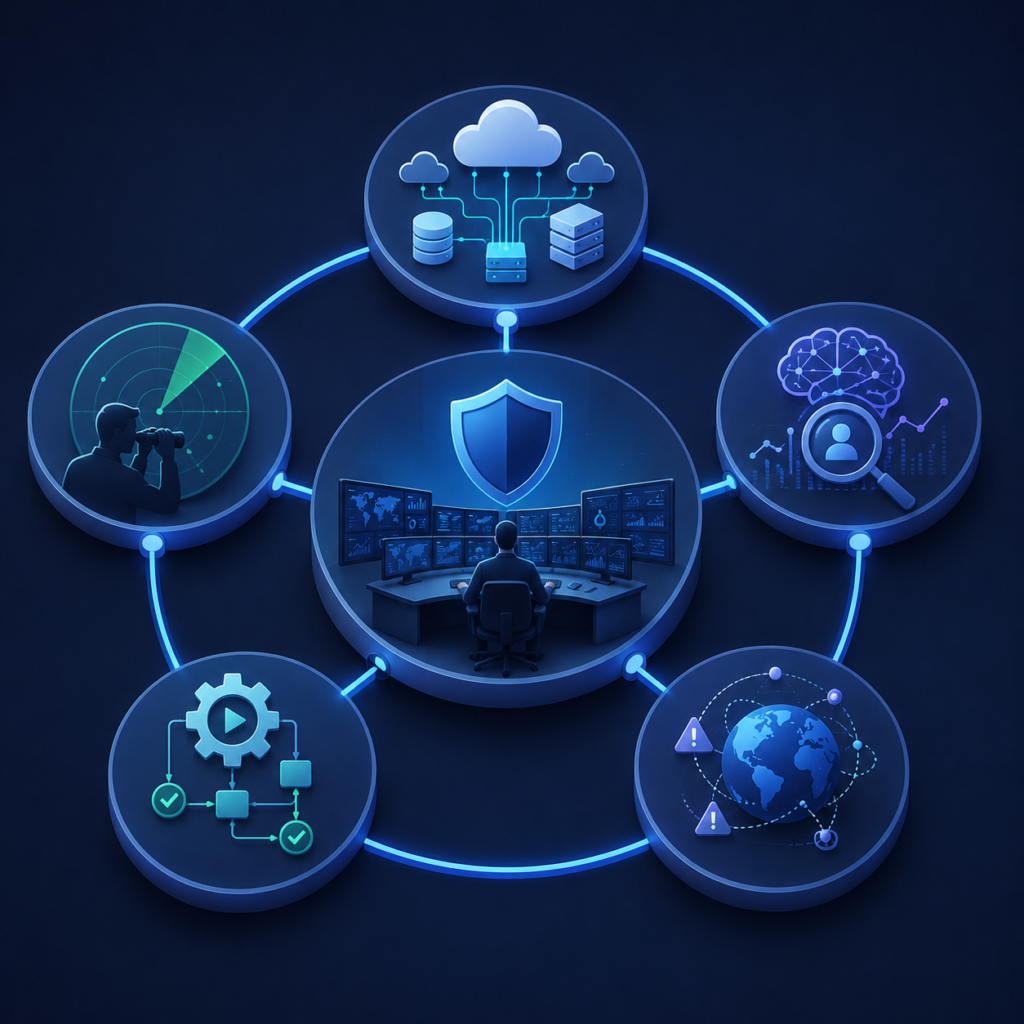
A high-maturity SOCaaS offering is defined by several core architectural and operational components:
- Unified Telemetry Ingestion: The ability to ingest and normalize data from disparate sources—multi-cloud environments (AWS, Azure, GCP), SaaS applications, and on-premise infrastructure.
- Advanced Detection Logic: Moving beyond simple signature-based alerts to behavioral analytics and machine learning models that identify lateral movement and credential abuse.
- Integrated Threat Intelligence: Ingesting global and industry-specific indicators of compromise (IoCs) to proactively hunt for threats before they trigger standard alerts.
- Orchestration & Automation (SOAR): Utilizing automated playbooks to handle routine tasks, such as IP shunning, ensuring human analysts focus on complex investigations.
- Continuous Threat Hunting: A proactive layer where analysts assume the network is already breached and use hypotheses to search for hidden adversaries.
How It Works (Process-Level Explanation)
The lifecycle of a SOCaaS engagement follows a structured operational cadence:
Phase 1:
Onboarding and Log Strategy
Instead of sending all logs (which leads to “noise” and high costs), a strategic SOCaaS provider helps define a log ingestion policy based on the MITRE ATT&CK framework to ensure visibility into critical attack vectors.
Phase 2:
Detection Engineering
Custom use cases are developed to reflect the unique environment of the client. This includes tuning out “false positives” inherent to specific business applications.
Phase 3:
Continuous Monitoring & Triage:
24/7 monitoring is performed by Tier 1 and Tier 2 analysts. When an anomaly is detected, it is enriched with context (user role, asset criticality) before being escalated.
Phase 4:
Collaborative Incident Response
Once a true positive is identified, the SOCaaS team works alongside the client’s internal stakeholders, providing clear remediation steps or executing automated containment actions.
Phase 5:
Feedback and Hardening:
Every incident or “near-miss” results in a Post-Incident Report that informs future detection tuning and infrastructure hardening.
Business Value & Use Cases
The transition to SOCaaS offers significant business advantages:
OpEx vs. CapEx Optimization:
Converts massive upfront costs of hardware and software licenses into predictable, scalable monthly subscriptions.
Solving the Talent Gap:
Immediate access to a pool of global security experts (Threat Hunters, Incident Responders, Forensics specialists) that are otherwise difficult to hire.
Accelerated Maturity:
Move from a “reactive” state to a “proactive” security posture in weeks rather than years.
Compliance Readiness:
Meeting stringent regulatory requirements (NESA, ISR, GDPR) through documented evidence of continuous monitoring.
How to Evaluate Vendors / Solutions
CISOs should evaluate potential partners based on these critical criteria:
Integration Depth:
How well does the service integrate with your existing stack? Evaluation should focus on advanced SIEM deployment strategies that ensure seamless data flow.
Transparency of Logic
Can the vendor show you exactly what detection rules are running? Avoid "black box" solutions where you don't own or see the detection engineering.
MTTD and MTTR Metrics:
Request audited metrics on how quickly the vendor identifies (Mean Time to Detect) and contains threats (Mean Time to Respond).
Data Sovereignty & Expertise:
Ensure compliance with local data residency laws (UAE/GCC). Inquire about the certifications (SANS, OSCP) and experience level of the actual analysts.
Common Challenges & Pitfalls
The "Alert Factory" Trap:
Choosing a provider that passes through every alert without context, moving “alert fatigue” from one team to another.
Visibility Gaps:
Failing to provide telemetry from cloud workloads or remote endpoints, leading to exploitable blind spots.
Poorly Defined Escalation:
If the “hand-off” isn’t defined in a RACI matrix, critical minutes are lost during a breach.
Over-focus on Tools
SOAR cannot replace human intuition for complex, “low and slow” advanced persistent threats (APTs).
Maturity Model / Best Practices
01
Level 1 (Reactive)
Focus on log collection, basic compliance, and perimeter alerts. High noise, low context.
02
Level 2 (Compliance-Driven)
Integration of EDR/XDR, defined incident response playbooks, and structured 24/7 coverage.
03
Level 3 (Proactive)
Deployment of managed detection and response capabilities, including active threat hunting and threat intelligence fusion.
04
Level 4 (Strategic)
Continuous security validation, automated containment, and deep alignment with business continuity planning.
How It Fits Into
Broader SOC Strategy
SOCaaS provides the “Detection and Response” backbone that allows the internal security team to focus on “Governance, Risk, and Compliance” (GRC) and high-level architectural improvements. By offloading the commodity work of 24/7 monitoring, internal leaders can spend more time on high-value strategy and infrastructure hardening.
Advisory Note
At SOCExpert.ae, we act as your independent advisory partner in the SOCaaS journey. We do not provide the SOC service ourselves; rather, we provide the technical and strategic oversight to help you choose the right partner, validate their performance, and ensure your organization isn’t just “buying a service,” but building a capability.
We ensure your strategy belongs to you, not your vendors.
Conclusion: The Future of Strategic Defense
The future of SOC as a Service lies in hyper-automation and specialized industry context. As threats become more automated, the SOC of tomorrow will rely on AI-driven insights to predict attack paths before they manifest. However, the human element—the expert analyst who understands the nuance of your business—will remain the ultimate line of defense.