
INCIDENT RESPONSE SERVICES: ORCHESTRATING RESILIENCE UNDER PRESSURE
Introduction: The Reality of the "When, Not If" Paradigm
In a modern threat landscape characterized by polymorphic malware and human-operated ransomware, the goal of cybersecurity has shifted from absolute prevention to rapid resilience. Even the most sophisticated defenses can be bypassed. Incident Response (IR) Services are the enterprise’s “emergency room”—providing the specialized expertise, forensic rigor, and decisive action required to contain a breach, minimize impact, and ensure that a security event does not become a business-ending catastrophe.
What This Service Means in Modern SOC
Modern Incident Response is no longer a reactive “firefighting” exercise. In a high-maturity SOC, IR represents a Structured Readiness Capability. It is the transition from chaotic reaction to data-driven containment. This service means having a pre-defined, battle-tested framework that integrates technical forensics with corporate governance. It is about maintaining a state of constant readiness through retainer-based access to elite responders who understand both the technical nuances of a breach and the business implications of downtime.
Key Components / Capabilities
A high-performance MDR/XDR capability is built upon several integrated pillars:
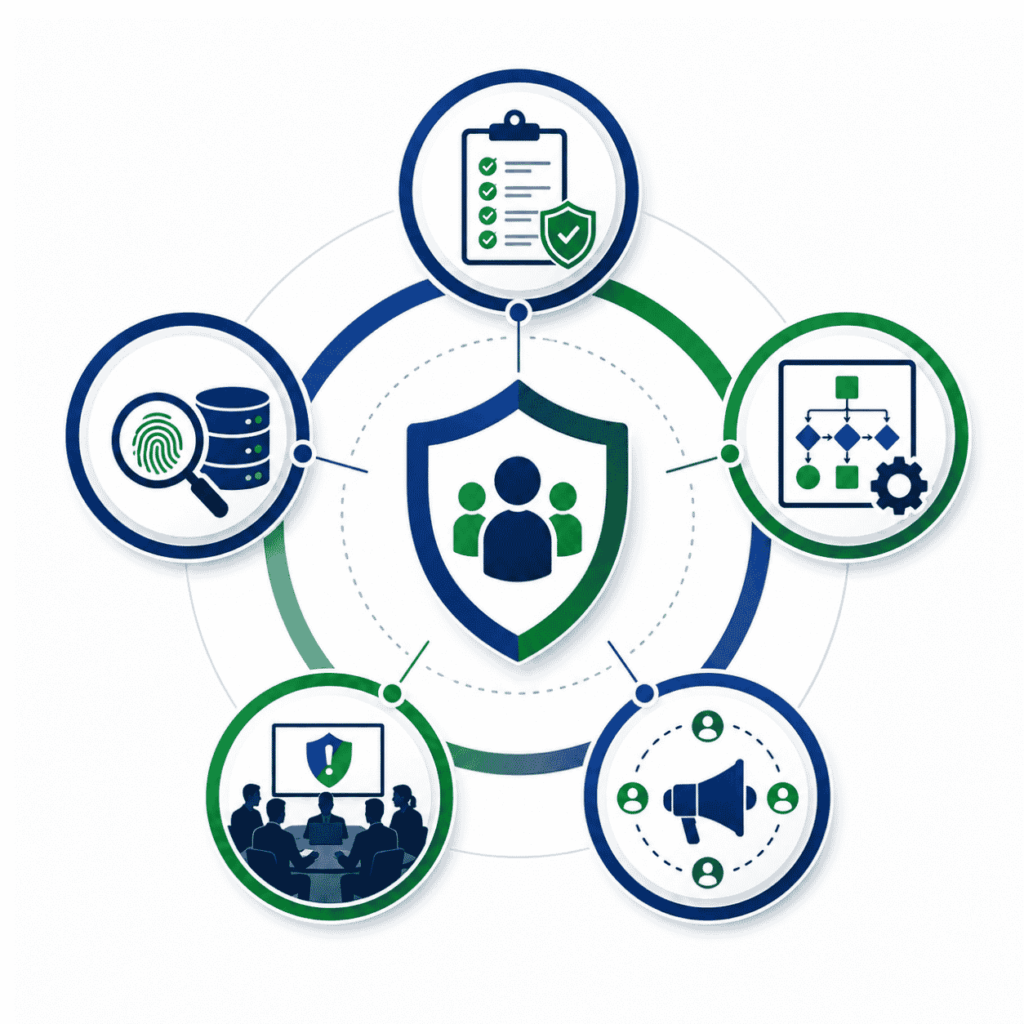
- Emergency IR Retainer: Guaranteed access to a team of elite responders with defined Service Level Agreements (SLAs) for remote and on-site support.
- Digital Forensics (DFIR): The scientific collection and analysis of digital evidence to determine the root cause, scope of data access, and timeline of the breach.
- Tabletop Exercises (TTX): Facilitated simulations that test the decision-making capabilities of both technical teams and executive leadership (C-Suite/Legal).
- Threat Neutralization & Containment: Decisive actions to isolate compromised assets, revoke malicious credentials, and block adversary command-and-control (C2) channels.
- Crisis Management Coordination: Providing a structured communication bridge between IT, Legal, PR, and Insurance stakeholders to manage the external and internal narrative.
How It Works (Process-Level Explanation)
The Incident Response lifecycle follows the globally recognized NIST/SANS framework, optimized for speed:
Phase 1
Preparation & Readiness
Establishing communication channels, deploying forensic sensors, and conducting baseline audits of the environment.
Phase 2
Detection & Analysis
Utilizing managed detection and response capabilities to identify anomalies and validate the scope of the “True Positive” incident.
Phase 3
Containment & Neutralization
Implementing short-term and long-term containment strategies (e.g., VLAN isolation, session resets) to stop the attacker’s progress.
Phase 4
Eradication & Recovery
Removing the root cause (e.g., web shells, backdoors) and restoring systems from verified, clean backups to return to “Business as Usual.”
Phase 5
Post-Incident Activity:
A “Lessons Learned” session to update the IR plan, tune advanced SIEM deployment strategies, and harden the infrastructure against re-infection.
Business Value & Use Cases
Strategic IR planning provides measurable protection for the organization’s bottom line:
Minimization of Financial Loss
Drastically reducing the cost per breach by shortening the time an attacker has access to sensitive data.
Preservation of Brand Equity:
Managing the incident with transparency and speed to maintain customer and shareholder trust.
Legal and Regulatory Defensibility
Providing the forensic evidence required to prove “due diligence” to regulators (NESA, ISR, GDPR) and insurance providers.
Operational Continuity
Ensuring that recovery efforts are prioritized based on business criticality, not just technical ease.
How to Evaluate Vendors / Solutions
When evaluating an IR partner, CISOs must look past technical jargon and assess:
Forensic Rigor
Does the vendor follow strict "Chain of Custody" protocols? Can their findings hold up in a court of law or a regulatory audit?
Breadth of Expertise
Do they have experience across Cloud (Azure/AWS), On-Premise, and specialized OT/ICS environments?
Speed of Mobilization
What is the actual "Time to Keyboard" SLA? How quickly can they begin remote triage versus on-site arrival?
Strategic Retainer Flexibility:
Does the retainer allow for "proactive hours" to be used for tabletop exercises or threat hunting if no incident occurs?
Communication Maturity
Can the lead responder translate technical findings into a business-risk narrative for the Board of Directors?
Common Challenges & Pitfalls

The Wait and See Delay
Waiting too long to activate IR, allowing the attacker to establish deep persistence or begin data exfiltration.

Lack of Forensic Preservation
Internal teams accidentally “trampling” on evidence by rebooting servers or changing logs before a forensic image is taken.

Siloed Communication
Failing to involve Legal and PR early in the process, leading to inconsistent messaging and increased liability.
Incomplete Root Cause Analysis
Focusing on “reformatting” infected machines without identifying how the attacker got in, leading to immediate re-infection.
Maturity Model / Best Practices
01
Level 1 (Reactive)
No formal IR plan; response is ad-hoc and relies on internal IT staff with no specialized forensic tools.
02
Level 2 (Developing)
A basic IR plan exists; a third-party partner is identified but not on a formal retainer.
03
Level 3 (Proactive)
Formal IR retainer in place; regular tabletop exercises are conducted; DFIR tools are pre-deployed for instant triage.
04
Level 4 (Resilient)
IR is integrated into business continuity; continuous security validation automated containment playbooks for high-fidelity alerts.
How It Fits Into
Broader SOC Strategy
Incident Response is the “Final Line of Defense.” It is the capability that ensures even when prevention and detection fail, the organization survives. IR provides the critical feedback loop that informs the entire SOC—telling the Detection Engineers which use cases to build and the Risk Managers where the actual architectural weaknesses lie
Advisory Note
SOCExpert.ae acts as your strategic readiness partner. We do not provide the boots-on-the-ground IR service; instead, we help you audit your IR plans, select the right retainer partner for your specific industry, and facilitate the tabletop exercises that ensure your team is ready for the “worst-day” scenario. We ensure your IR capability is a strategic asset, not an expensive afterthought.
We ensure your strategy belongs to you, not your vendors.
Conclusion: The Future of Strategic Defense
The future of Incident Response is “Automated Containment” and “Predictive Recovery.” As AI-driven attacks accelerate, the window for human intervention shrinks. Organizations that master the art of rapid, forensics-led response will be the ones that thrive in an era of constant digital volatility. Mastery of IR is no longer optional—it is the hallmark of a mature, resilient enterprise.