
Healthcare 

SOC Operational Architecture: Healthcare

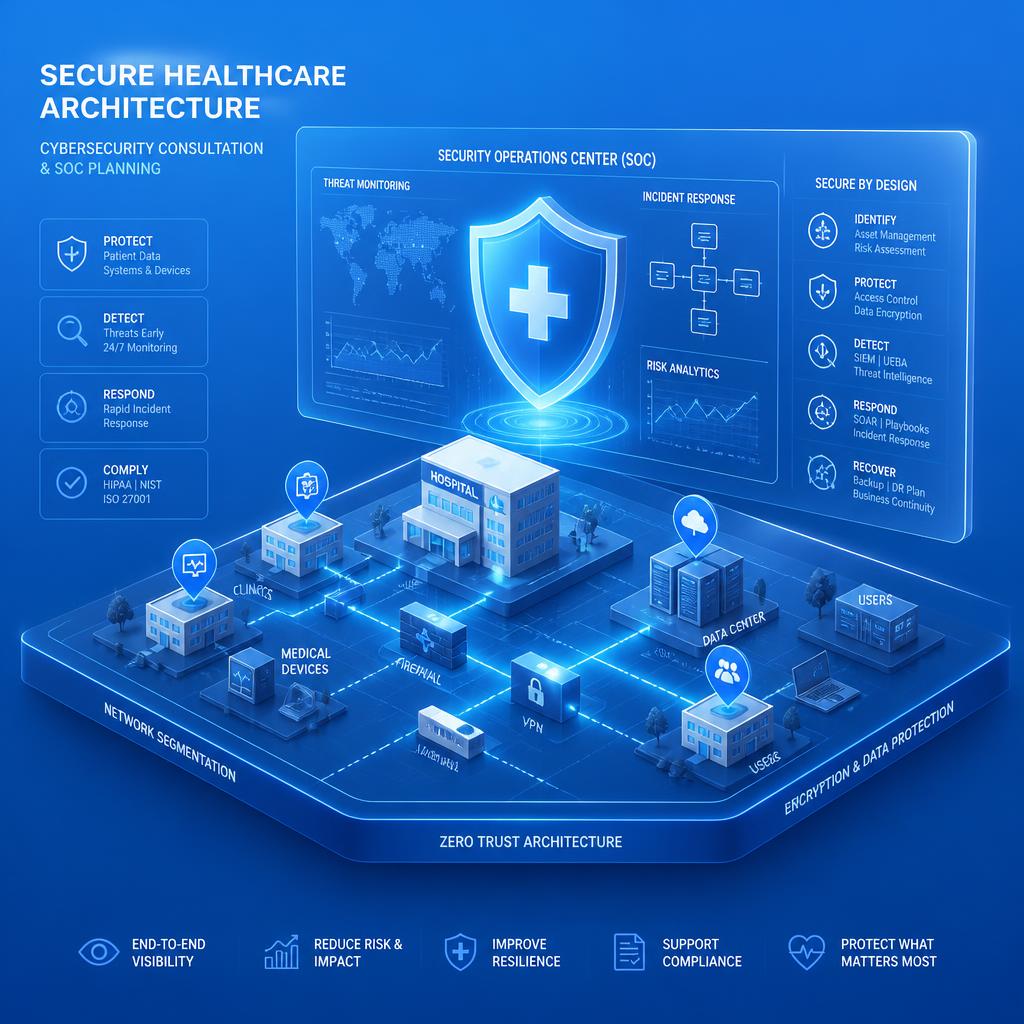
In the healthcare sector, the Security Operations Center (SOC) functions as a critical component of clinical safety. The operational mandate shifts from mere data protection to maintaining the availability of life-critical systems. The focus is on visibility into medical-specific environments and ensuring the continuity of care during security events.

The Operational Environment

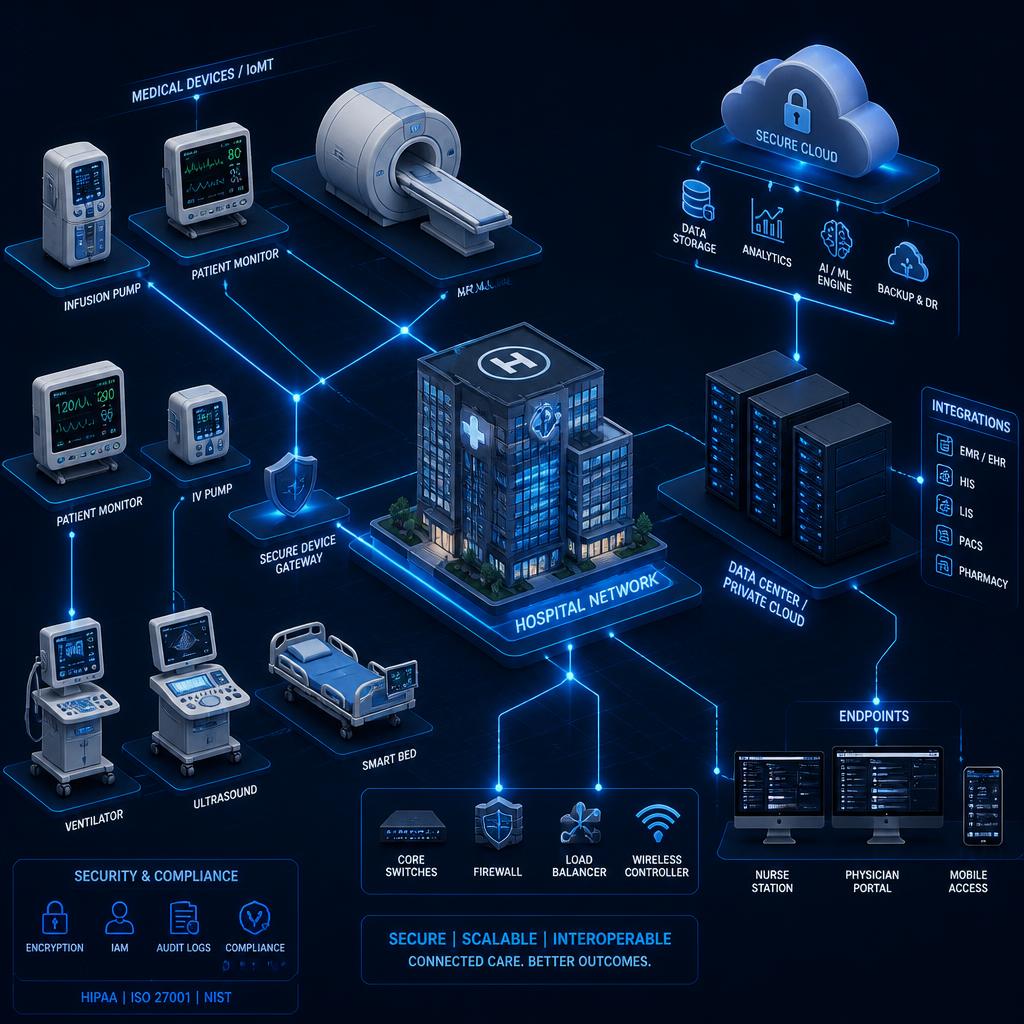
Healthcare ecosystems are distinct due to their reliance on fragile, legacy, and highly specialized devices. SOC operations must address the following requirements:

IoMT Visibility

Standard endpoint agents are often incompatible with Internet of Medical Things (IoMT) devices. Monitoring must utilize network-level traffic analysis to baseline the behavior of infusion pumps, imaging systems, and patient monitors.

Clinical Integrity

Data monitoring must focus on the integrity of Electronic Health Records (EHR) and clinical applications. Unauthorized access or modification to patient files constitutes a direct threat to clinical decision-making.

Network Segmentation Enforcement

Access controls are often flat by necessity for interoperability. The SOC must actively monitor and enforce segmentation between guest networks, administrative business systems, and life-critical OT (Operational Technology) zones.
Security Methodology

The technical framework for a healthcare-centric SOC relies on clinical context and specialized behavioral analysis.

Protocol-Specific Deep Packet Inspection (DPI)

We analyze proprietary medical protocols (e.g., DICOM, HL7) to detect anomalies that suggest unauthorized access to diagnostic imaging or patient data manipulation.

IoMT Behavioral Baselining

Since medical devices often exhibit predictable communication patterns, we create specific baselines for each device class. This flags devices that attempt to communicate with external command-and-control servers or pivot laterally to other clinical segments.

Clinical Data Loss Prevention (DLP)

Log aggregation is tuned to track the movement of PHI (Protected Health Information) at the application layer, ensuring that clinical data flow remains within authorized boundaries and that large-scale exfiltration attempts are blocked.

Incident Response Logic

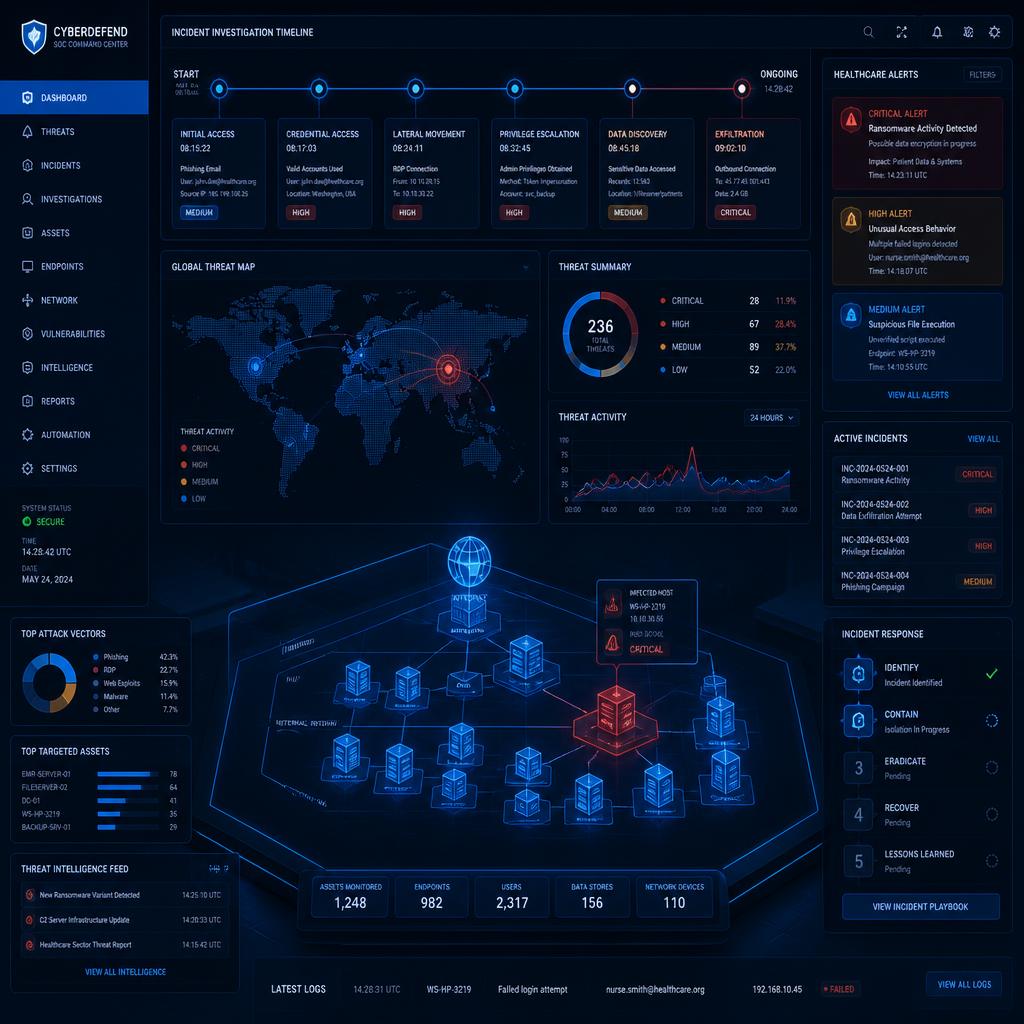
Incident response within healthcare is prioritized by patient safety metrics, where speed of recovery is as vital as containment:

Patient Safety Triage

Alerts are mapped to clinical impact. An alert involving a pharmacy system or surgical support device is prioritized over non-critical administrative issues.

Clinical-Safe Containment

Playbooks are designed to minimize clinical disruption. Containment measures—such as isolating a compromised workstation or medical device segment—must be validated to ensure they do not interrupt real-time monitoring or critical patient care delivery.
Technical Consultation

For healthcare organizations currently architecting or refining their SOC operations, our team is available for deep-dive discussions on these methodologies. We offer independent architectural reviews and operational guidance to ensure your detection and response capabilities are aligned with the realities of the clinical environment.