
SIEM IMPLEMENTATION & MANAGEMENT: ENGINEERING THE DATA FOUNDATION OF THE MODERN SOC
Introduction: The Evolution of the Security Data Plane
Modern SIEM management represents the transition from “Log Storage” to High-Fidelity Detection Engineering. In a sophisticated SOC, the SIEM serves as the primary data plane where disparate telemetry from endpoints, networks, and cloud workloads is fused into a single, actionable narrative. It means moving away from “collecting everything” and toward a strategic data ingestion policy that prioritizes high-value logs and reduces the noise that leads to analyst burnout. It is the core engine that powers both automated response and human-led threat hunting.
What This Service Means in Modern SOC
Modern MDR/XDR is defined by Outcome-Based Security. It is not just a technology stack; it is a specialized operational capability. XDR provides the technical framework—unifying telemetry from previously siloed layers (Endpoint, Network, Identity, Cloud)—while MDR provides the human-led expertise to act on that telemetry. In a modern SOC, this service means moving from “Alert Triage” to “Rapid Containment,” ensuring that detection leads directly to a response action without the friction of manual tool-hopping.
Key Components / Capabilities
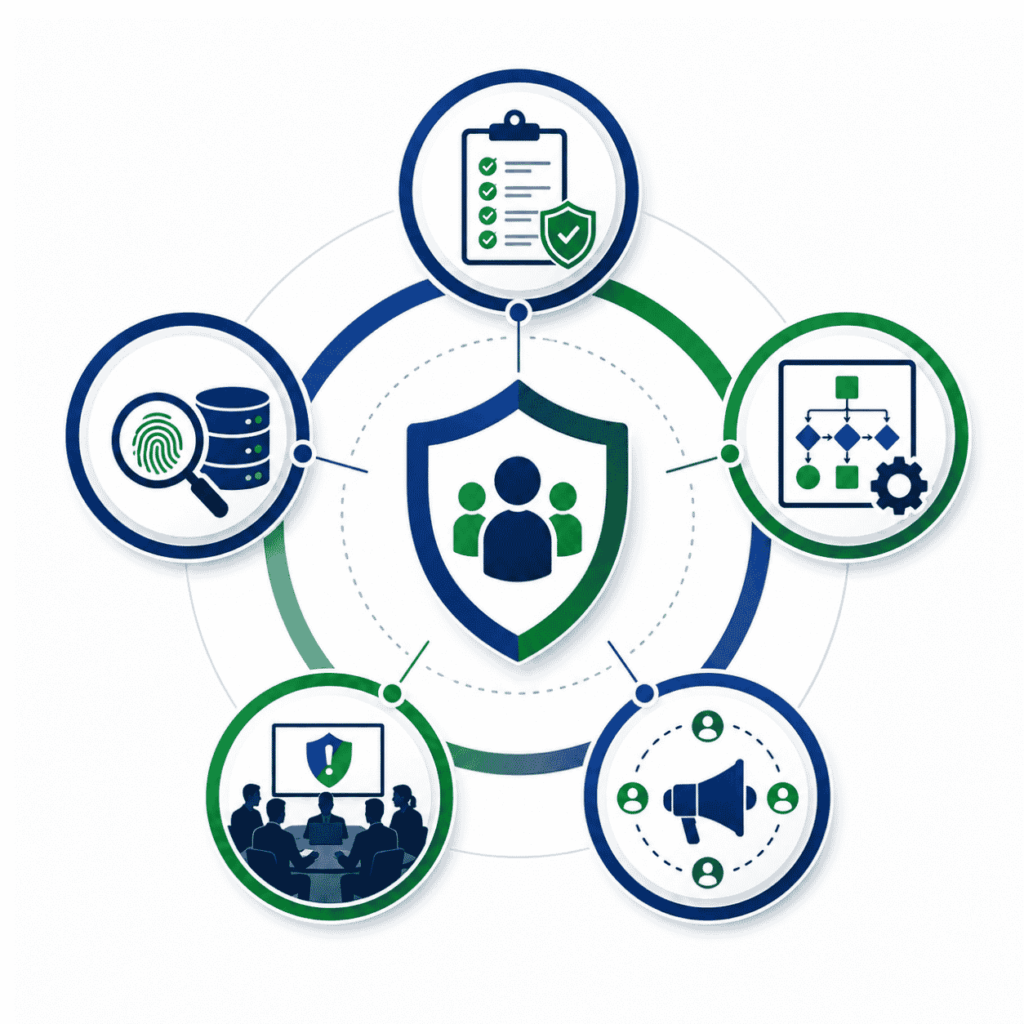
A resilient SIEM implementation is built upon several technical and operational pillars:
- Elastic Data Ingestion: The ability to ingest and normalize logs from diverse sources—SaaS apps, multi-cloud control planes, and legacy on-premise infrastructure—at scale.
- Schema Normalization (Common Information Model): Converting disparate log formats into a unified schema to enable cross-platform correlation and efficient querying
- Advanced Correlation & Analytics: Utilizing complex logic to identify patterns of activity that, when viewed in isolation, appear benign but indicate a multi-stage attack.
- Long-Term Data Retention & Tiering: Managing storage costs by moving data between "hot" searchable tiers and "cold" archival tiers based on compliance and investigative needs.
- Visualization & Executive Reporting: Transforming raw security data into intuitive dashboards that communicate risk, performance metrics (MTTD/MTTR), and compliance status to stakeholders.
How It Works (Process-Level Explanation)
The SIEM lifecycle is a continuous cycle of engineering, monitoring, and optimization
Phase 1
Architecture & Scope Definition
dentifying critical assets, compliance requirements, and defining the ingestion strategy to ensure maximum visibility with optimized costs.
Phase 2
Data Onboarding & Parsing
Establishing secure data pipelines and developing custom parsers to ensure that all incoming data is correctly normalized and searchable.
Phase 3
Use Case Engineering
Developing and deploying advanced SIEM deployment strategies that include specific detection rules mapped to the MITRE ATT&CK framework.
Phase 4
Content Tuning & Optimization
Continuously reviewing alert performance to reduce false positives and ensure that the SIEM evolves alongside the threat landscape.
Phase 5
Managed Maintenance
Handling the operational overhead of the platform, including software updates, health monitoring, and storage management.
Business Value & Use Cases
MDR/XDR services provide clear, measurable value to the enterprise:
Reduction in Mean Time to Contain (MTTC)
Shifting the focus from just “detecting” to “stopping,” often reducing containment times from days to minutes.
Improved Analyst Productivity
Automating the “grunt work” of data collection, allowing the security team to focus on high-value investigations.
Lower Total Cost of Ownership (TCO):
Consolidating multiple point-products into a unified XDR framework reduces licensing and training overhead.
Strategic Risk Reduction:
Providing a holistic view of the attack surface, identifying systemic weaknesses before they are exploited.
How to Evaluate Vendors / Solutions
CISOs must look beyond the “XDR” marketing label and evaluate:
Cloud-Native vs. Legacy
Does the solution scale dynamically with your cloud growth, or is it hindered by fixed on-premise hardware limitations?
Cost Predictability
Does the vendor charge based on data volume (GB/day), Events Per Second (EPS), or compute power? Beware of "data taxes" that penalize growth.
Query Speed & Search Flexibility
How quickly can your analysts search across months of data during a high-pressure investigation?
Integration Ecosystem:
How easily does the SIEM integrate with your existing EDR, NDR, and Identity providers
Out-of-the-Box Content:
Does the vendor provide a rich library of pre-built detection rules, or will your team be building everything from scratch?
Common Challenges & Pitfalls
The "Data Vacuum" Strategy:
Ingesting every possible log without a clear detection use case, leading to astronomical costs and search latency.
Parser Fragility
Relying on default parsers that break when an upstream application updates its log format, resulting in “dead zones” of visibility.
Alert Fatigue
Failing to tune out noisy, low-value alerts, causing analysts to miss critical “True Positive” signals.
Stale Rule Sets
Keeping detection rules active that are no longer relevant to your environment or the current threat landscape.
Maturity Model / Best Practices
01
Level 1 (Reactive)
Centralized logging for compliance; basic search capabilities; limited correlation
02
Level 2 (Integrated)
Standardized normalization; mapping to MITRE ATT&CK; initial 24/7 monitoring.
03
Level 3 (Advanced)
Advanced behavioral analytics; integration with SOAR; custom use-case engineering.
04
Level 4 (Optimized)
Automated threat hunting; AI-driven anomaly detection; full integration with business risk management and predictive modeling.
How It Fits Into
Broader SOC Strategy
The SIEM is the “Source of Truth” for the entire SOC. It informs Incident Response by providing the historical context of a breach and guides Vulnerability Management by showing which assets are being actively targeted. Without a well-managed SIEM, other advanced functions like SOAR or Managed Detection and Response (MDR) lack the reliable data needed to function effectively
Advisory Note
SOCExpert.ae acts as your strategic architect for the security data plane. We do not sell SIEM licenses; our role is to help you design the architecture, select the platform that fits your data volume and budget, and provide the ongoing oversight to ensure your SIEM is an engine for detection, not just a costly archive. We help you move from “logging data” to “engineering insights.”
We ensure your strategy belongs to you, not your vendors.
Conclusion: The Future of Strategic Defense
The future of SIEM lies in the “Security Data Lake” model—a fusion of hyper-scale storage and AI-driven analysis. As data volumes explode, the SIEM of tomorrow will be more autonomous, helping analysts find the “needle in the haystack” through automated pattern recognition. Master the management of your SIEM today to build the resilient, data-driven security operations of tomorrow.