
SOAR AND SECURITY AUTOMATION: ORCHESTRATING SPEED AND SCALE IN THE MODERN SOC
Introduction: The Crisis of Human Scale
In the contemporary threat landscape, the sheer velocity of attacks has surpassed the limits of human manual intervention. SOC teams are frequently overwhelmed by a deluge of alerts, leaden with manual triage processes and tool-switching friction that delays critical response. Security Orchestration, Automation, and Response (SOAR) is not just about replacing human effort; it is about liberating it. By automating the mundane and orchestrating the complex, SOAR transforms the SOC from a reactive bottleneck into a high-speed engine of cyber resilience.
What This Service Means in Modern SOC
Modern Security Automation represents the move from “Isolated Scripts” to Standardized Orchestration. In a sophisticated SOC, SOAR acts as the connective tissue between disparate security layers—Endpoint, Network, Identity, and Cloud. It means moving beyond simple “if-this-then-that” logic to complex, multi-tool playbooks that enforce consistent response logic across the enterprise. It is the mechanism that ensures detection leads to containment in seconds, not hours, regardless of whether the attack occurs at 2 AM or 2 PM.
Key Components / Capabilities
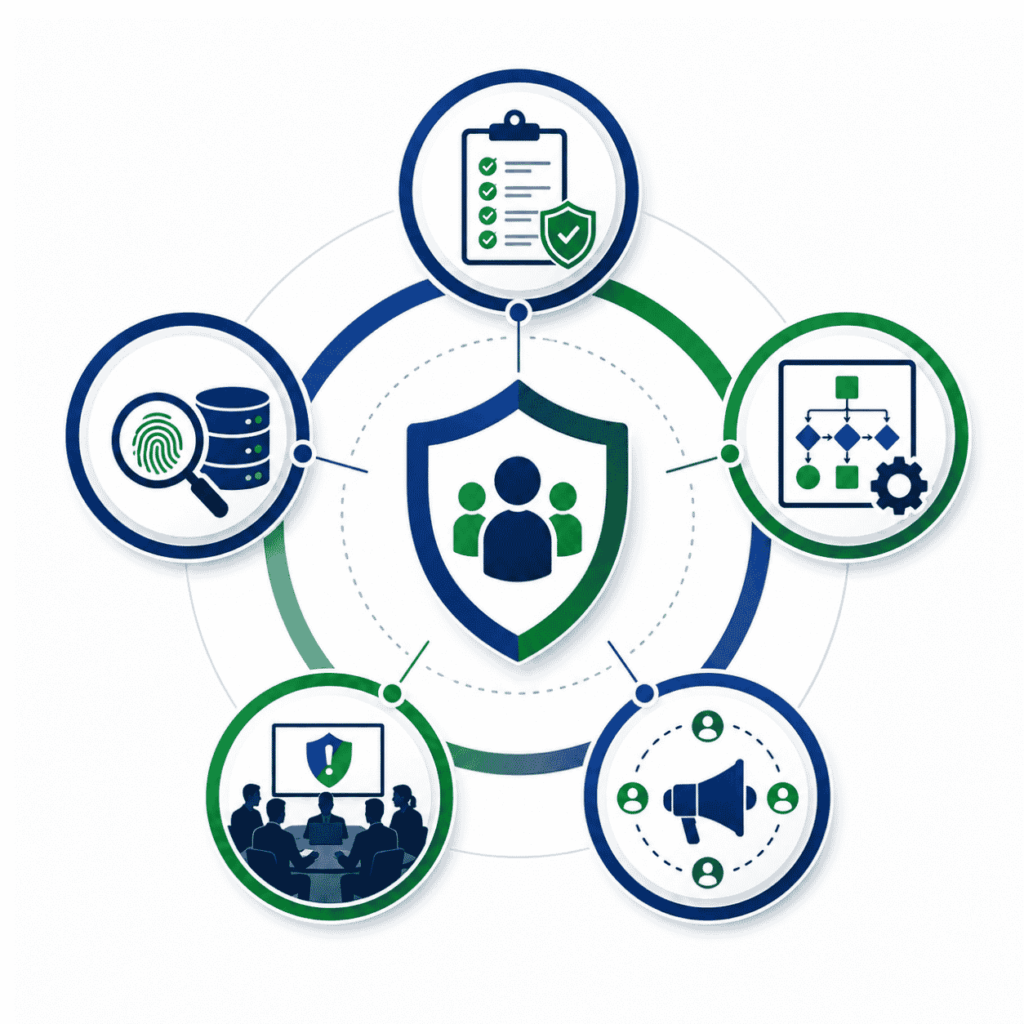
A high-maturity automation capability is built upon several foundational pillars:
- Playbook Orchestration: A centralized library of digital "Standard Operating Procedures" that define the exact steps for investigating and containing specific threat types.
- Multi-Tool Integration (App Ecosystem): The ability to communicate with firewalls, EDR, SIEM, and identity providers through a robust API-driven ecosystem.
- Case Management & Triage: A unified workspace where automated enrichment (e.g., threat intel lookups) is presented to analysts alongside investigative data.
- Automated Enrichment & Scoring: Automatically adding context to alerts—such as user department, asset criticality, and file reputation—to prioritize high-risk events.
- Bi-Directional Actionability: The capability to not only receive alerts but to push active response commands (e.g., account suspension, IP blocking) back to the security stack.
How It Works (Process-Level Explanation)
The automation lifecycle is an engineering discipline that follows a structured loop:
Phase 1
Process Mapping & Logic Discovery
Identifying repetitive, manual tasks that currently delay response and documenting the logic required to automate them
Phase 2
Playbook Development:
Engineering the technical logic within the SOAR platform, connecting the necessary APIs and defining conditional branching.
Phase 3
Enrichment & Data Fusion
Integrating threat intelligence integration to ensure playbooks have the external context needed for accurate decision-making.
Phase 4
Testing & Shadow Execution
Running playbooks in “semi-automated” mode, where the system suggests actions but requires a human “one-click” approval before execution.
Phase 5
Full Autonomy & Optimization
Senior analysts review the “Incident” to confirm intent and severity, filtering out benign administrative anomalies.
Business Value & Use Cases
Strategically deployed automation delivers a profound impact on organizational risk:
Reduction in Mean Time to Respond (MTTR)
Containing threats in seconds rather than hours, significantly reducing the potential for lateral movement and data exfiltration.
Standardization of Response:
Ensuring that every incident is handled with the same forensic rigor and logic, regardless of the analyst’s experience level.
Analyst Burnout Mitigation:
Offloading the high-volume, low-value work of triage, allowing the team to focus on proactive threat hunting.
Maximizing Stack ROI
Forcing your existing investments in EDR and advanced SIEM deployment strategies to work together as a unified ecosystem.
How to Evaluate Vendors / Solutions
CISOs must evaluate SOAR solutions based on integration depth and ease of use:
API Breadth and Native Integrations
How many "out-of-the-box" connectors does the platform have for your specific security stack?
Low-Code vs. Full-Code
Can your analysts build and maintain playbooks easily, or does it require a dedicated software engineering team?
Community and Playbook Marketplace:
Does the vendor provide a library of pre-built playbooks shared by other security teams in your industry?
ROI Visibility:
Does the solution provide metrics on "Time Saved" and "Manual Tasks Prevented" to justify the investment to the Board?
Common Challenges & Pitfalls
Automating a Broken Process
Attempting to automate a response flow that isn’t clearly defined manually, leading to “automated chaos.

The Black Box Automation Trap
Implementing fully autonomous response for low-fidelity alerts, which can lead to accidental business outages (e.g., blocking a critical CEO account).
Integration Fragility
Failing to maintain playbooks as upstream security tools update their APIs, leading to logic failures during a real breach.
Underestimating Engineering Effort:
Viewing SOAR as a “product” rather than a continuous engineering commitment that requires ongoing tuning.
Maturity Model / Best Practices
01
Level 1 (Manual)
Alerts are triaged manually; limited use of disparate scripts; high MTTR and significant analyst fatigue.
02
Level 2 (Orchestrated)
Basic integration between SIEM and EDR; initial library of documented playbooks; human-led “one-click” response.
03
Level 3(Automated)
Full managed detection and response capabilities with automated enrichment; automated containment for high-fidelity alerts.
04
Level 4 (Optimized):
Continuous playbook validation; AI-driven logic suggestions; full orchestration across IT, HR, and Legal for holistic response.
How It Fits Into
Broader SOC Strategy
SOAR is the “Execution Layer” of the modern SOC. While the SIEM provides the “Brain” (Detection), SOAR provides the “Muscles” (Response). It ensures that the insights generated by Threat Intelligence and Use Case Engineering are acted upon with machine speed, closing the gap between discovery and neutralization.
Advisory Note
SOCExpert.ae serves as your strategic automation architect. We do not sell SOAR software; instead, we help you map your processes, select the platform that fits your technical maturity, and provide the oversight to ensure your playbooks are engineered for resilience, not just speed. We help you move from “manual toil” to “orchestrated excellence.”
We ensure your strategy belongs to you, not your vendors.
Conclusion: The Future of Strategic Defense
The future of SOAR lies in the transition to “Hyper-Automation” where AI predicts the next step of an attack and pre-emptively adjusts playbooks in real-time. Organizations that master the art of orchestration today will be the ones capable of defending against the automated, multi-vector threats of tomorrow. Mastery of SOAR is the ultimate differentiator in the race against time.