
VULNERABILITY MANAGEMENT:TRANSITIONING FROM SCANNING TO CONTINUOUS EXPOSURE MANAGEMENT
Introduction: Beyond the Scan-and-Patch Treadmill
In an era of hyper-velocity exploits and sprawling digital footprints, the traditional approach of monthly vulnerability scanning followed by a frantic “patch-everything” cycle is no longer viable. Organizations are often overwhelmed by thousands of vulnerabilities, many of which pose no actual risk to their specific environment. Modern Vulnerability Management is the strategic discipline of identifying, prioritizing, and neutralizing the exposures that matter most to business continuity. It is the shift from reactive maintenance to proactive risk reduction.
What This Service Means in Modern SOC
Modern Vulnerability Management represents the move from “Vulnerability Scanning” to Risk-Based Exposure Management (RBVM). In a sophisticated SOC, this service acts as the intelligence filter for the IT operations team. It means moving beyond simple CVE counts and CVSS scores to incorporate environmental context, threat intelligence, and asset criticality. It is the bridge between the security team’s visibility and the infrastructure team’s remediation efforts, ensuring that every hour spent patching delivers maximum impact on the organization’s risk posture.
Key Components / Capabilities
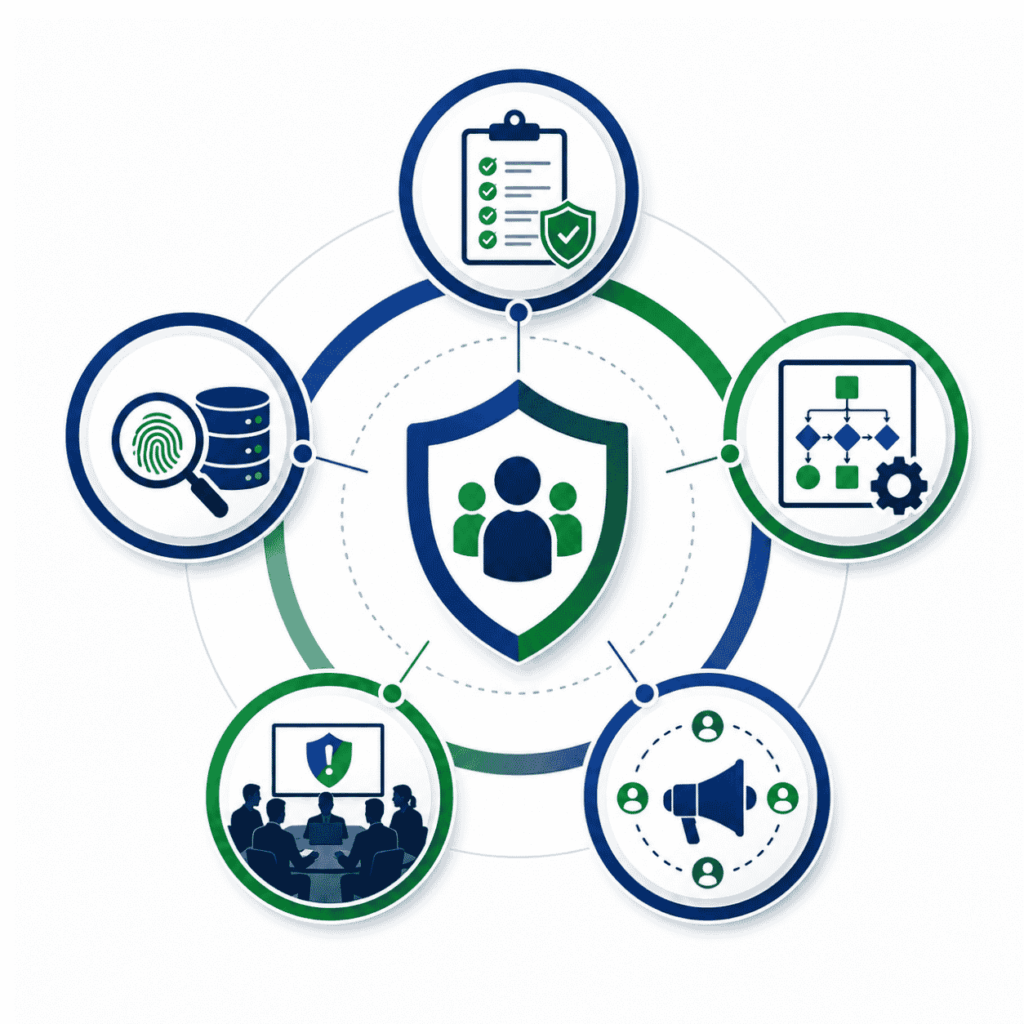
A high-maturity vulnerability management capability is built upon several integrated pillars:
- Continuous Asset Discovery: Real-time identification of all assets—on-premise, cloud, IoT, and remote—to ensure there are no "shadow IT" blind spots.
- Contextual Risk Scoring: Enhancing standard CVSS scores with internal context (e.g., is the asset internet-facing?) and external threat intel (e.g., is this exploit being actively used by ransomware groups?).
- Automated Prioritization (RBVM): Utilizing algorithms to rank vulnerabilities based on the likelihood of exploitation and the potential business impact.
- Patch Orchestration & Verification: Streamlining the hand-off to remediation teams and automatically verifying that patches have been applied correctly.
- Application & Cloud-Native Security: Specialized scanning for containerized workloads, serverless functions, and CI/CD pipelines to secure the modern development lifecycle.
How It Works (Process-Level Explanation)
The vulnerability management lifecycle is a continuous, five-phase loop:
Phase 1
Discover & Inventory
Identifying and categorizing every asset in the digital estate to establish a baseline of what needs protection.
Phase 2
Assess & Scan
Utilizing both agent-based and network-based scanning to identify software flaws, misconfigurations, and weak credentials.
Phase 3
Prioritise & Contextualise:
Correlating scan results with threat intelligence integration to identify the “critical few” vulnerabilities that represent actual risk.
Phase 4
Remediate & Mitigate
Orchestrating the application of patches or implementing compensating controls (like WAF rules or IPS signatures) for systems that cannot be easily patched.
Phase 5
Verify & Audit
Re-scanning systems to confirm remediation and providing executive reports on the overall reduction in organizational risk.
Business Value & Use Cases
Strategic exposure management provides tangible benefits to both technical and business stakeholders:
Reduction in Breach Likelihood
Shifting the focus from just “detecting” to “stopping,” often reducing containment times from days to minutes.
Operational Efficiency:
Directing limited IT resources to the most critical patches, stopping the “ghost chasing” associated with low-risk alerts.
Regulatory Compliance
Meeting the stringent scanning and remediation requirements of frameworks such as NESA, ISR, UAE IA, and PCI-DSS.
Enhanced ROI on Security Stack
Using vulnerability data to tune advanced SIEM deployment strategies and focus monitoring on known weak points.
How to Evaluate Vendors / Solutions
CISOs must evaluate vulnerability management solutions based on their ability to provide context and scale label and evaluate:
Prioritization Engine Quality
Does the vendor provide its own proprietary risk score, or does it rely solely on generic CVSS?
Asset Coverage Breadth
Can the solution handle modern cloud-native assets and remote workforces as effectively as traditional data centers?
Integration Ecosystem:
Does it integrate natively with your ticketing systems (ITS M), SIEM, and managed detection and response capabilities?
Scanning Accuracy
What is the false-positive rate? Does the solution provide "authenticated" scanning to get deep into the OS and application layers?
Reporting for Stakeholders
Does the platform offer clear, risk-based dashboards for executives and granular, technical lists for engineers
Common Challenges & Pitfalls
The "Data Dump" Failure
Sending thousands of raw scan results to the IT team without prioritization, leading to friction and ignored reports.
Scanning Frequency Gaps
Scanning quarterly or monthly in a world where new exploits are released daily.
Ignoring Misconfigurations
Focusing exclusively on software patches while leaving critical security gaps like open ports or default passwords unaddressed.
The Cloud Blindness Trap
Using legacy network scanners that cannot see ephemeral cloud workloads or SaaS configurations.
Maturity Model / Best Practices
01
Level 1 (Reactive)
Ad-hoc scanning for compliance; manual spreadsheet-based tracking; prioritization based only on CVSS High/Medium/Low.
02
Level 2(Organized)
Scheduled monthly scanning; centralized dashboarding; initial integration with ticketing systems.
03
Level 3 (Proactive
Continuous scanning; risk-based prioritization (RBVM) using threat intel; automated verification of patches.
04
Level 4 (Resilient)
Integration into CI/CD pipelines (DevSecOps); full exposure management (CTEM); predictive risk modeling and automated mitigation
How It Fits Into
Broader SOC Strategy
Vulnerability Management is the “Map” of the SOC. It tells the Detection Engineers which assets are most vulnerable so they can build specific SIEM use cases, and it tells the Incident Responders the most likely entry points used during a breach. It is the fundamental data layer that ensures the SOC is defending the enterprise with full knowledge of its own weaknesses.
Advisory Note
SOCExpert.ae acts as your strategic exposure architect. We do not sell scanning software; instead, we help you audit your current program, select the platform that fits your hybrid infrastructure, and provide the technical oversight to ensure your teams are focused on the vulnerabilities that represent a true business threat. We help you move from “finding flaws” to “managing risk.”
We ensure your strategy belongs to you, not your vendors.
Conclusion: The Future of Strategic Defense
The future of Vulnerability Management is “Continuous Threat Exposure Management” (CTEM). As the attack surface expands into AI and edge computing, the speed of identification must match the speed of the cloud. Organizations that master the transition from static scanning to risk-based, automated exposure management will be the ones that remain resilient in an increasingly volatile digital economy.